
The Mysterious Smile That Defies Time
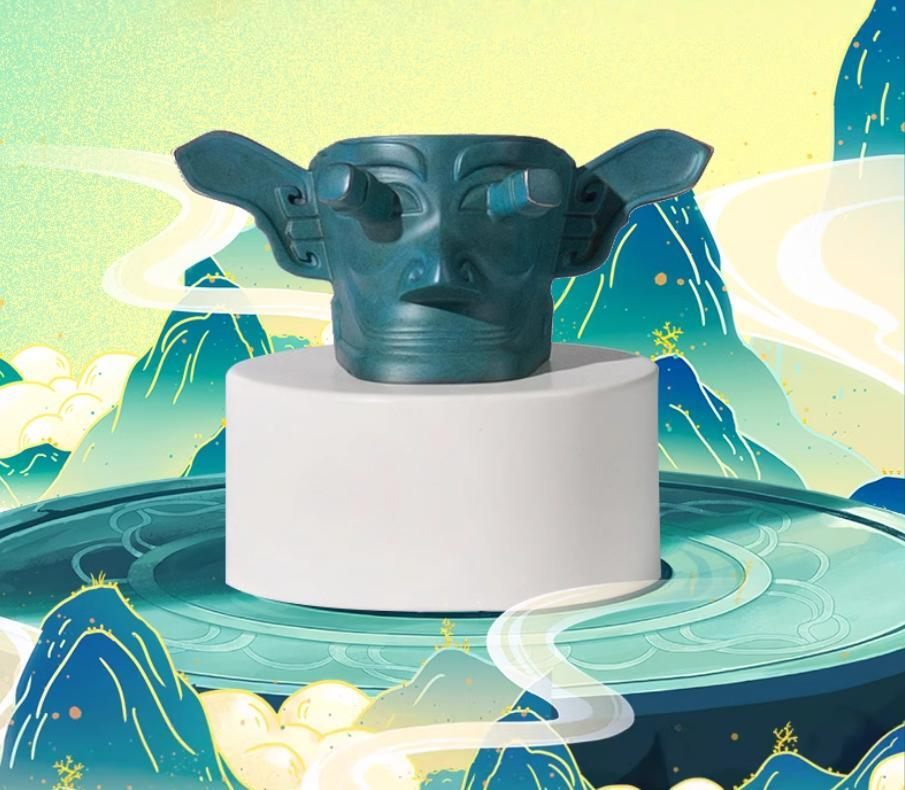
Imagine standing in a dimly lit ritual hall, 3,000 years ago. Flickering torchlight dances across a face that seems to peer beyond the mortal realm—a face with eyes that protrude sixteen centimeters from its sockets, ears that flare like those of a sacred beast, and a smile so enigmatic it could make the Mona Lisa seem straightforward by comparison.
This is the Bronze Protruding Eyes Mask, one of the most arresting artifacts ever discovered from ancient Chinese bronze art. Unearthed in 1986 from the Sanxingdui sacrificial pit in Sichuan Province, this bronze age ritual mask doesn't just represent a deity or ancestor—it embodies an entire civilization's vision of the supernatural, crafted with a sophistication that would not be matched in Chinese bronze age art masterpieces for centuries.

What makes this sanxingdui mask artistic style so profoundly unsettling and beautiful? Why did the artisans of the Late Shang Dynasty choose to exaggerate the eyes to such impossible proportions? And how does this ancient asian bronze art tradition compare to the expressionist movements that would emerge in Europe three millennia later?
Eastern Expressionism Before Expressionism Existed
When Pablo Picasso shattered conventional representation in the early 20th century, he believed he was inventing something radical. Yet here, in the bronze age chinese art history, we find a mask that achieves what art historians would later call "expressionism"—the distortion of physical form to convey spiritual truth—around 1200 BCE.
The sanxingdui bronze artistic achievement lies not in realistic representation but in what Chinese aesthetic philosophy calls "chuan shen xie zhao"—capturing the spirit rather than the form. The bronze mask symbolic eye design isn't a mistake or primitive attempt at realism. It's a deliberate artistic choice, a visual language declaring that this being sees beyond the mortal plane.

Consider the bronze age sculptural art china tradition. While contemporary Egyptian artisans were crafting idealized, serene faces for their pharaohs, and Mycenaean goldsmiths were hammering out stylized death masks, the ancient shu unique art tradition produced something entirely different: a face that refuses to be categorized as either human or divine, existing in that liminal space where ancient chinese religious art objects operate.
The sanxingdui art expressionism comparison becomes even more striking when you examine the technical execution. The bronze mask casting technique analysis reveals that the protruding eyes were cast separately and then integrated into the main structure—a feat of bronze casting artistry that required extraordinary precision. The artisans understood that these weren't just decorative elements; they were the focal point of the entire composition, demanding both structural integrity and aesthetic impact.
The Aesthetic Philosophy Behind the Protrusion
To understand why the sanxingdui mask visual impact works so powerfully, we must delve into ancient chinese mask aesthetics. In Western art tradition, proportion and symmetry often define beauty. But in eastern expressionism in ancient art, the goal is different: to manifest the invisible qualities that make something sacred.
The bronze age chinese aesthetic values prioritized what couldn't be seen over what could. The protruding eyes aren't meant to represent a physical deformity or disease, as some early Western interpreters speculated. Instead, they embody the concept of "tong tian da di"—the ability to communicate between heaven and earth. This bronze mask with supernatural vision represents a being whose perception transcends normal human limitations.
Look at the sanxingdui bronze decorative patterns that adorn portions of the mask. The cloud-and-thunder motifs (yunwen and leiwen) aren't mere decoration. In chinese bronze age artistic techniques, these patterns carry cosmological significance, representing the forces of nature that the depicted entity commands or embodies. The ancient mask design spiritual meaning operates on multiple levels simultaneously—visual, symbolic, and ritual.

From the perspective of history, no affairs exist in isolation or fragmentation; they inevitably have antecedents and consequences. One of the main reasons why Sanxingdui art is full of mystery and a sense of fragmentation is that it existed in an era before the historical records of ancient Shu, and no written text has been found in its excavation to this day. As for its origin, natural legends prevail. The most convincing legend at present is that its exaggerated shape comes from the image of the founder of the ancient Shu civilization, "Cancong". In other literary records and folk legends, there are records of "Cancong" as a vertical eye. This kind of vertical gaze vividly displays a majestic state of glaring angrily. The "Cancong" taught the ancient Shu ancestors the skills of planting mulberry trees, raising silkworms, and weaving silk with silk. In that barbaric era, this silk product became a bargaining chip for exchanging goods between ancient Shu and other civilized tribes, giving ancient Shu a foundation for prosperity and reproduction. Therefore, the people of Sanxingdui in later generations worshipped their ancestral leaders and gradually mythologized and deified the "Cancong" shape, which was full of rationality in terms of imagination space!
The bronze age ritual art significance becomes clearer when we consider the mask's original context. At 65 centimeters tall and weighing approximately 80 kilograms, this wasn't a wearable mask. It was a cult object, fixed in place during ceremonies, its exaggerated features designed to be viewed from below by worshippers in a state of ritual anticipation. The sanxingdui mask cultural symbolism works through scale and presence, not portability.
Craftsmanship That Defies Explanation
The bronze age mask craftsmanship displayed in this artifact remains a subject of awe among modern metallurgists. The ancient chinese bronze artistic techniques employed here showcase a level of sophistication that challenges our understanding of bronze age chinese art masterpieces.
The mask was created using the piece-mold casting technique, a method perfected during the Chinese Bronze Age but executed here with unusual ambition. The protruding eyes, each extending 16 centimeters from the face, required separate molds and careful integration with the main facial structure. Any miscalculation in the bronze mask casting technique analysis would have resulted in structural failure—the eyes would crack off during cooling or handling.

What's remarkable about the sanxingdui artistic innovation bronze age is not just the technical skill but the aesthetic confidence. The artisans weren't copying a template; they were innovating within a Sichuan bronze tradition that had developed independently from the Central Plains bronze culture. This ancient shu unique art tradition produced forms that have no parallel in contemporaneous Chinese bronze age artifacts from Anyang or Zhengzhou.
The surface treatment adds another layer of sanxingdui art expressionism comparison. Traces of cinnabar and other pigments suggest the mask was originally painted, adding color to the already striking form. The chinese bronze mask surface decoration would have created an even more vivid impression in the flickering torchlight of ritual ceremonies—a bronze age ritual mask china that seemed to glow with otherworldly presence.
The Mysterious Smile: Decoding Emotional Ambiguity
Perhaps the most captivating element of the Bronze Protruding Eyes Mask is its smile. Unlike the stern, imposing expressions of Shang dynasty taotie masks from the Central Plains, this sanxingdui mask artistic style features lips that curve upward in what could be read as amusement, benevolence, or knowing superiority.
This why this mask smiles mysteriously has generated extensive scholarly debate. Some interpret it as the serene confidence of a deity who sees all. Others read it as the satisfaction of ancestral spirits receiving proper worship. In the context of ancient chinese religious art objects, the smile serves a specific ritual function: it reassures worshippers that their offerings are accepted, that the spiritual channel remains open.

The bronze age chinese aesthetic values appreciated this kind of emotional ambiguity. Rather than depicting a single, fixed emotion, the mask holds multiple possibilities in tension. This aligns with broader eastern art tradition principles where meaning emerges from the interaction between object and viewer, not from the object alone.
Compare this to ancient mask art cross cultural examples. Greek theatrical masks exaggerate emotions to be readable from distance—pure joy or pure tragedy. Egyptian funerary masks present idealized serenity. But the sanxingdui mask cultural symbolism operates differently: its smile invites interpretation, drawing the viewer into an active relationship with the artifact. This chinese bronze mask artistic value lies in its participatory nature.
Cross-Cultural Artistic Dialogues
When we place the Bronze Protruding Eyes Mask within ancient asian bronze art styles, fascinating comparisons emerge. The Olmec colossal heads of Mesoamerica, created around the same period, also feature exaggerated features and mysterious expressions. Both traditions seem to understand that representing the sacred requires departing from naturalism.
Yet the chinese bronze age artistic techniques differ fundamentally from Olmec stone carving. The bronze mask casting technique analysis reveals a culture that mastered metal at a time when most civilizations were still working primarily in stone or clay. This bronze age sculptural art china achievement speaks to the technological sophistication of the Ancient Shu Civilization.

The sanxingdui museum bronze collection art also invites comparison with Japanese Noh masks, though separated by two millennia. Both traditions use stylization to represent spiritual states rather than individual personalities. The ancient chinese mask aesthetics and Noh theater's omote (surface) concept share a philosophical foundation: the mask doesn't hide identity; it reveals a deeper truth.
For Western viewers accustomed to chinese bronze art western analysis frameworks, the mask challenges categorization. Is it sculpture? Ritual object? Religious icon? The bronze age chinese art history doesn't recognize these modern distinctions. In the Late Shang Art Style, art, religion, and power were inseparable—the Chinese Ritual Masks served all functions simultaneously.
The Visual Language of Divine Perception
The bronze mask symbolic eye design deserves special attention as the mask's defining feature. In ancient shu unique art tradition, the eye wasn't just an organ of sight but a conduit of spiritual power. The protrusion physically manifests the concept of "extended vision"—the ability to see beyond the visible world.
This sanxingdui mask artistic style choice resonates with broader eastern expressionism in ancient art principles. In Chinese painting theory, the goal is to capture the "spirit resonance" (qi yun) of a subject, not its literal appearance. The bronze age chinese aesthetic values prioritized essence over accident, meaning over mimesis.

The ancient mask design spiritual meaning extends to the other features as well. The flared ears suggest heightened hearing—the ability to perceive prayers and offerings. The broad nose and wide mouth indicate the capacity to receive and consume sacrificial offerings. Every element of the sanxingdui bronze artistic achievement serves a ritual function while maintaining aesthetic coherence.
This integration of form and function exemplifies the chinese bronze age artistic techniques at their peak. The bronze age ritual art significance isn't added to the art; it is the art. The Sanxingdui Art tradition understood that ritual efficacy required aesthetic power—the more compelling the representation, the more effective the spiritual communication.
Legacy and Contemporary Resonance
Today, the sanxingdui museum bronze collection art continues to captivate audiences worldwide. The Bronze Protruding Eyes Mask has become an icon of Chinese Bronze Age culture, appearing in everything from academic publications to popular media. Its sanxingdui mask visual impact translates across cultural boundaries, speaking to universal human fascinations with the mysterious and the sublime.
The ancient chinese bronze artistic techniques that created this masterpiece remain influential. Contemporary Chinese artists reference the sanxingdui art expressionism comparison in works that explore cultural identity and historical memory. The eastern art tradition embodied in the mask continues to inform Chinese Ritual Masks and ceremonial art.

For collectors and connoisseurs of ancient asian bronze art styles, the mask represents the pinnacle of bronze age chinese art masterpieces. Its chinese bronze mask artistic value extends beyond historical significance to pure aesthetic achievement. The sanxingdui bronze artistic achievement stands as proof that 3,000 years ago, artists in Sichuan were creating work that could challenge and inspire viewers in the 21st century.
The bronze age mask craftsmanship also raises questions about cultural transmission and independent innovation. Did the Ancient Shu Civilization develop its unique art tradition in isolation, or were there connections to other bronze age chinese art history centers? The sanxingdui artistic innovation bronze age suggests a culture confident enough to forge its own path while participating in broader Chinese Bronze Age cultural networks.
The Enduring Mystery
Three millennia after its creation, the Bronze Protruding Eyes Mask retains its power to unsettle and inspire. The sanxingdui mask cultural symbolism may have shifted—from ritual object to museum artifact to cultural icon—but the ancient chinese mask aesthetics remain as compelling as ever.
What makes this chinese bronze age art masterpieces example so enduring? Perhaps it's the way the bronze mask symbolic eye design seems to look back at us, across the centuries, with that mysterious smile. Perhaps it's the technical mastery of the bronze age mask craftsmanship that still impresses modern metallurgists. Or perhaps it's the way the sanxingdui art expressionism comparison challenges our assumptions about artistic development and cultural sophistication.

The ancient shu unique art tradition that produced this mask disappeared as suddenly as it emerged, leaving behind the sanxingdui sacrificial pit artifacts as its only testament. The Bronze Protruding Eyes Mask stands as a monument to a civilization that saw the world differently—and saw it more clearly, perhaps, than we give them credit for.
In the end, the chinese bronze mask artistic value lies not just in what the mask tells us about the Ancient Shu Civilization, but in what it reveals about the universal human impulse to create beauty that transcends time. The sanxingdui museum bronze collection art reminds us that great art—whether from 1200 BCE or 2026 CE—speaks directly to something eternal in the human spirit.
The Bronze Protruding Eyes Mask saw everything then. And now, it sees us.