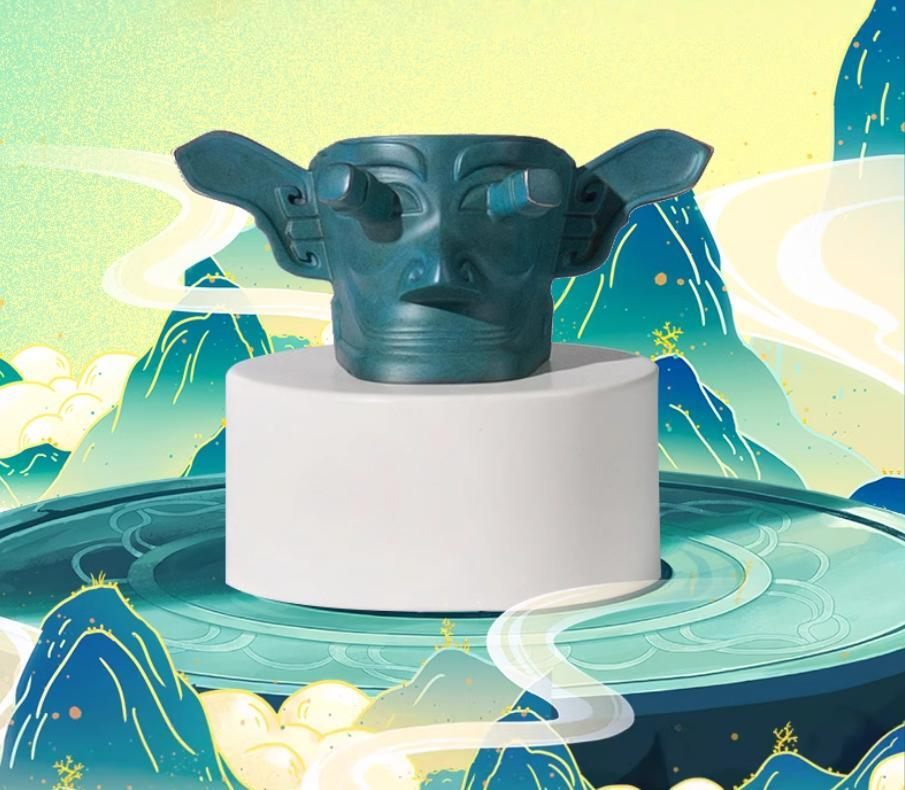

The Face of Power: Art Meets Authority in Shang Dynasty Bronze
In the dim light of a ritual chamber, circa 1200 BCE, Fu Hao stood before her assembled generals. In her hands, she held not merely a weapon, but a masterpiece of Chinese bronze weapon art - a yue axe that embodied both deadly function and transcendent beauty. This was no ordinary battle axe. This was art forged in fire, a sacred weapon that proclaimed her authority as China's first recorded female military commander.
The Fu Hao bronze yue axe represents one of the most extraordinary intersections of ancient Chinese weapon aesthetics and military power ever created. When archaeologists unearthed this ceremonial weapon from her tomb in 1976 at Yinxu, Anyang, they discovered more than a historical artifact - they found proof that in Shang Dynasty bronze art, beauty and brutality were not opposites, but partners in the theater of power.
The Artistic Revolution of Shang Bronze Casting
To understand the artistic significance of Fu Hao's bronze axe, we must first appreciate the revolutionary bronze casting techniques that made such artistic mastery possible. The Shang Dynasty bronze decorative motifs found on Fu Hao's weapons represent the pinnacle of ancient Chinese metalwork artistic skill, achieved through a complex piece-mold casting process that remained unmatched in the ancient world.
The taotie pattern bronze axe designs that adorn Fu Hao's yue are not mere decoration. They are sophisticated visual design elements that serve multiple artistic symbolism purposes. The taotie - a mythical creature with a frontal face, often interpreted as a gluttonous beast or protective deity - creates an immediate visual power that would have been unmistakable to any viewer, friend or foe.
From a Western art perspective, the taotie motif on Fu Hao's axe parallels the use of decorative motifs in European medieval weaponry - think of the intricate engravings on Viking swords or the religious iconography on Crusader blades. But the Shang Dynasty bronze artistic tradition achieved something unique: the complete integration of surface decoration with the weapon's structural form, creating what modern art historians might call "total design unity."
The Aesthetic of Intimidation: Beauty as Psychological Warfare
The artistic design elements of Fu Hao's bronze yue were calculated to inspire awe and terror in equal measure. The ancient Chinese ceremonial weapon design philosophy understood that weapon form beauty could be as effective as the blade itself. When an enemy general saw the ritual axe artistic symbolism of Fu Hao's weapon - the gleaming bronze casting, the fierce taotie patterns, the perfect balance of form and function - they were confronting not just a warrior, but the manifested power of an entire civilization's artistic heritage.
This ancient Chinese weapon artistic style employed what we might now recognize as psychological warfare through aesthetic impact. The Shang Dynasty weapon artistic value lay not only in its effectiveness in battle, but in its ability to communicate authority before a single blow was struck. The ceremonial weapon art historical significance of Fu Hao's axe extends far beyond its military utility - it is a statement about the role of artistic achievement in establishing and maintaining power.
The Chinese bronze age sacred weapons like Fu Hao's yue operated in a realm where the boundaries between ritual art, military equipment, and artistic masterpiece were deliberately blurred. This bronze age artistic innovation created objects that were simultaneously functional weapons, religious art pieces, and visual culture icons that defined Shang Dynasty art style for centuries.
The Taotie Enigma: Decoding the Artistic Language of Power
The taotie pattern that dominates Fu Hao's bronze axe artistic design has fascinated art historians and archaeologists for over a century. This decorative pattern - characterized by a symmetrical, frontal face with prominent eyes, often lacking a lower jaw - represents one of the most distinctive artistic innovations of the Chinese bronze age.
From an aesthetic analysis perspective, the taotie on Fu Hao's weapon serves multiple design philosophy functions. First, it creates immediate visual impact through its symmetrical composition and bold surface ornament. Second, it embeds artistic symbolism that would have been instantly recognizable to contemporary viewers - the taotie as protector, as devourer of enemies, as mediator between the human and spirit worlds.
The bronze casting artistic method used to create these taotie patterns required extraordinary technical artistry. Each decorative element was carefully modeled in clay, then used to create piece molds that would capture every detail of the artistic design. The result is a surface decoration quality that rivals the finest sculptural work of any ancient civilization.
Western art critics comparing Fu Hao's taotie bronze work to contemporary European bronze age art often note the superior sophistication of the Chinese aesthetic approach. Where Mycenaean Greek weapons favored geometric simplicity, the Shang bronze artistic mastery embraced complex, layered visual design that rewards close examination.
The Material Poetry of Bronze: Craftsmanship as Art
The ancient Chinese bronze texture design of Fu Hao's axe reveals the artistic innovation possible when technical skill meets creative vision. The bronze casting process used by Shang Dynasty artisans allowed for unprecedented control over surface decoration, enabling the creation of decorative motifs with remarkable depth and detail.
The material aesthetics of Fu Hao's yue axe would have been striking even in antiquity. Freshly cast, the bronze weapon would have gleamed with a golden hue (ancient bronze contained more tin than modern alloys, giving it a brighter appearance). The taotie patterns, raised in high relief against the weapon surface, would have caught light dramatically, creating a visual culture impact that enhanced the artistic significance of the piece.
This Chinese bronze age decorative arts tradition understood that material choice was itself an artistic statement. Bronze was not merely practical - it was precious, difficult to produce, and imbued with spiritual significance. The artistic heritage of Fu Hao's axe lies partly in this material symbolism - bronze as the medium of kings, of rituals, of eternal power.
The ancient Chinese bronze artistic tradition that produced Fu Hao's weapon represented centuries of artistic development. From the earliest Chinese bronze age experiments around 2000 BCE to the sophisticated Shang Dynasty bronze visual culture of Fu Hao's time (circa 1200 BCE), Chinese artisans had refined their bronze casting artistic method to an unmatched level of artistic mastery.
The Feminine Authority: Gender and Artistic Power
Fu Hao's bronze yue carries additional artistic significance as a symbol of female power in the ancient Chinese military hierarchy. As the only female general in recorded Shang Dynasty history, Fu Hao's weapon art challenged contemporary gender norms while simultaneously affirming her military authority through artistic excellence.
The artistic design of Fu Hao's axe makes no concessions to gender expectations. It is as fierce, as sophisticated, as technically accomplished as any male commander's weapon. This artistic equality speaks volumes about Fu Hao's unique position in Shang Dynasty society - she earned her military command through demonstrated capability, and her ceremonial weapons reflected that earned authority through their artistic merit.
From a modern feminist art history perspective, Fu Hao's bronze axe represents an extraordinary example of female empowerment expressed through material culture. The artistic achievement of her weapons declares that military power, ritual authority, and artistic patronage were not exclusively male domains in Shang Dynasty China.
The Fu Hao artifacts artistic heritage includes multiple bronze weapons, each displaying the same level of artistic sophistication. This consistency suggests that Fuhao herself understood the power symbolism of artistic excellence - that her weapons collection would communicate her authority to future generations through their artistic value alone.
The Ritual Dimension: Sacred Art in Military Context
The ancient Chinese weapon ritual significance of Fu Hao's yue axe extends beyond its military function. In Shang Dynasty belief systems, warfare was not merely a secular activity but a sacred undertaking requiring divine approval and spiritual protection. Fu Hao's bronze axe, with its taotie patterns and ceremonial design, served as both weapon and ritual object.
The religious art elements of Fuhao's weapon connected her military campaigns to the spiritual realm. Before battle, the yue axe would have been used in sacrificial rituals, its artistic power invoked to secure divine favor. The taotie motif, possibly representing a protective deity, transformed the weapon into a conduit between human and supernatural forces.
This sacred weapon status elevated Fu Hao's bronze axe from mere tool to artistic masterpiece with spiritual significance. The Chinese bronze age sacred weapons tradition understood that artistic beauty could enhance ritual efficacy - a beautifully crafted weapon was more likely to attract divine attention and blessing.
The artistic symbolism of Fu Hao's ritual weapon thus operated on multiple levels: as military equipment, as religious art, as political statement, and as artistic achievement. This multi-dimensional artistic significance is what makes Fu Hao's bronze yue such an extraordinary example of ancient Chinese bronze artistic innovation.
The Archaeological Discovery: Art Resurrected from the Earth
When archaeologists excavated Fu Hao's tomb at Yinxu in 1976, they discovered over 200 bronze artifacts, including multiple yue axes bearing her name. The artistic preservation of these ancient Chinese bronze weapon collection pieces was remarkable - after three millennia underground, the taotie patterns, the surface decoration, the very artistic essence of Fu Hao's weapons remained visible.
The Fu Hao tomb bronze weapons collection represents one of the most important archaeological discoveries in Chinese art history. For the first time, art historians could study Shang Dynasty bronze art from a known historical context, attributed to a specific individual whose life was documented in contemporary oracle bone records.
The artistic analysis of Fu Hao's bronze axe revealed sophisticated design philosophy choices. The placement of taotie motifs, the balance of decorative elements, the integration of functional form with aesthetic beauty - all demonstrated a level of artistic intention that challenged previous assumptions about ancient Chinese weapon artistry.
The museum artifact status of Fu Hao's weapons today - displayed in the National Museum of China and Henan Museum - continues their artistic legacy. Modern viewers, confronted with the visual power of these ancient bronze masterpieces, experience the same aesthetic impact that Fu Hao's contemporaries felt three thousand years ago.
The Enduring Legacy: Bronze Art Across Millennia
The artistic heritage of Fu Hao's bronze yue extends far beyond its historical moment. This ancient Chinese bronze artistic achievement influenced subsequent Chinese art traditions for centuries, establishing aesthetic principles that would define Chinese bronze weapon art throughout the bronze age and beyond.
The taotie pattern, perfected in Fu Hao's time, became a defining element of Chinese decorative arts, appearing on everything from ceremonial vessels to architectural ornament for millennia. The artistic innovation of integrating protective symbolism with aesthetic beauty became a hallmark of Chinese artistic tradition.
From a global art history perspective, Fu Hao's bronze axe stands alongside the greatest weapon art of any civilization - the swords of Samurai Japan, the blades of Viking Scandinavia, the daggers of Renaissance Italy. But the Chinese bronze age artistic mastery achieved something unique: the complete subordination of military function to artistic vision, creating weapons that were as much sculptural masterpieces as tools of war.
The artistic significance of Fu Hao's yue axe continues to inspire contemporary artists, designers, and scholars. The visual culture of Shang Dynasty bronze art informs modern Chinese aesthetic movements, while the feminist art history implications of Fu Hao's female military command expressed through artistic excellence resonates with contemporary discussions of gender and power.
Conclusion: The Eternal Art of Power
Fu Hao's bronze yue axe endures as a testament to the artistic achievement possible when technical mastery, creative vision, and cultural significance converge. This ancient Chinese bronze weapon is not merely a historical artifact - it is an artistic masterpiece that continues to speak across three millennia, declaring that true power lies not in destruction, but in the ability to create beauty that transcends time itself.
The artistic legacy of Fu Hao's ceremonial weapon reminds us that the greatest artistic achievements often emerge from unexpected contexts - that military equipment can become sacred art, that functional objects can achieve aesthetic immortality, and that artistic excellence remains the most enduring form of power.
When we stand before Fu Hao's bronze axe in a modern museum, we are not merely observing an archaeological find. We are witnessing the artistic heritage of a civilization that understood, three thousand years before our time, that true artistry transforms the temporal into the eternal, the functional into the sublime, the weapon into the work of art.