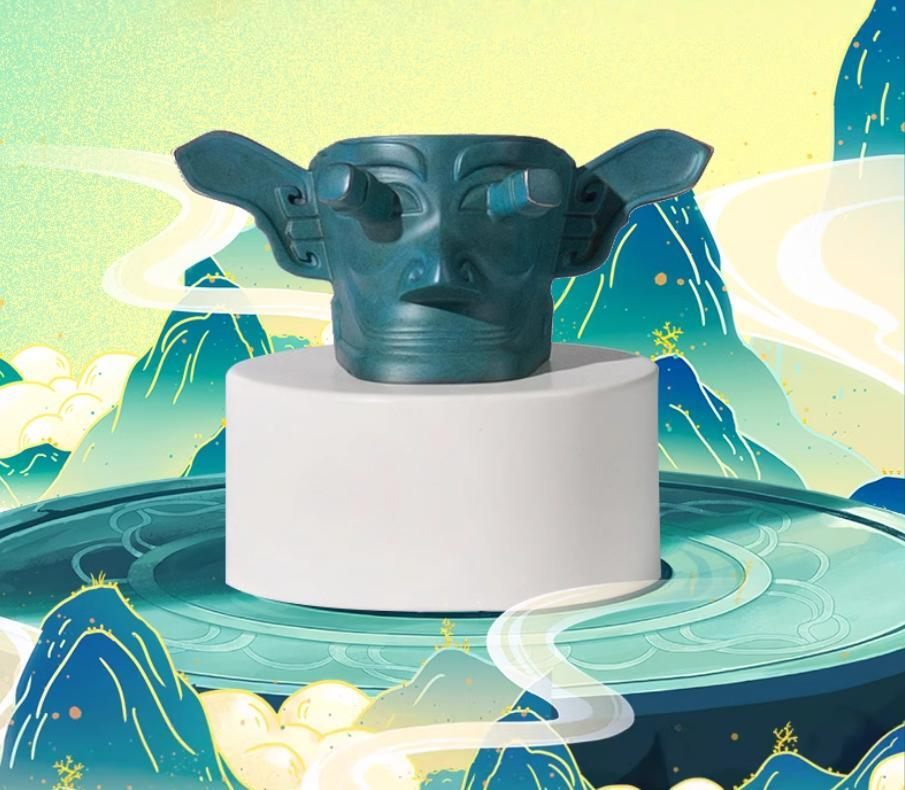

A Ritual Vessel That Defies Western Art Categories
When Western art historians encounter the Chinese bronze dragon art of the Shang Dynasty, they face a profound cognitive disruption. This is not merely decorative art—it is a sacred object believed to channel divine energy, to speak directly to ancestors, and to embody supernatural protective forces. The Dragon Pattern Si Gong, housed in the Shanxi Museum, stands as one of the most extraordinary examples of this ancient Chinese dragon pattern design.
Discovered in Tao River village, Shilou County, Shanxi Province, this ritual bronze wine vessel dates to the late Shang Dynasty (approximately 1300-1046 BCE). At over 3,000 years old, the Dragon Pattern Si Gong represents the pinnacle of Shang bronze animal motif art, combining sculptural mastery with profound spiritual symbolism that continues to captivate Chinese ritual vessel aesthetic scholars worldwide.
What makes this bronze age Chinese decorative art so remarkable is its dual nature: it functions simultaneously as a practical drinking vessel for elite banquets and as a sacred conduit for ancestor worship. This ancient China sculptural bronze work challenges our modern categorization of art versus ritual object, forcing us to reconsider the very nature of Chinese bronze surface ornamentation in its original cultural context.
The Dragon Motif as Visual Language of Power
The dragon motif dominating the Dragon Pattern Si Gong speaks a visual language fundamentally different from Western dragon representations. In European tradition, dragons symbolize chaos, evil, and destruction—creatures to be slain by heroic knights. The Chinese dragon not evil symbol represents an entirely opposite cosmological vision.
On this Shang dynasty artistic craftsmanship masterpiece, the dragon appears with an enlarged head, protruding eyes, and a sinuous "S"-shaped body that winds across the vessel's surface in rhythmic waves. This ancient Chinese symbolic animal art embodies authority, spiritual power, and auspicious fortune. The dragon was believed to traverse between heaven and earth, making it the perfect mediator for ritual bronze three dimensional design intended for ancestral communication.
The Shang bronze relief carving style employs raised relief techniques that create dramatic shadows and highlights, giving the dragon an almost three-dimensional presence. This Chinese ancient metal art form demonstrates sophisticated understanding of visual depth centuries before similar techniques emerged in Western bronze vessel artistic composition. The dragon's scales, claws, and horns are rendered with meticulous precision, showcasing the ancient China ornamental bronze design at its most refined.
Bronze Casting as Artistic Achievement of the Shang Bronze Age
The technical mastery required to create this Chinese dragon mythological art represents one of humanity's greatest ancient bronze casting artistic technique achievements. Shang artisans employed the piece-mold casting method, a Shang period bronze texture pattern process so complex that modern metallurgists still debate its precise execution.
First, artisans created a clay model of the Chinese ceremonial object beauty, then pressed clay molds around it in multiple sections. The dragon patterns were carved directly into these mold pieces before casting. When molten bronze—carefully alloyed with tin and lead for optimal hardness and luster—was poured into the assembled molds, it captured every detail of the bronze age Chinese visual culture design.
This Shang bronze age artistic achievement required extraordinary coordination among specialized craftsmen: model makers, mold carvers, metallurgists, and finishers. The Chinese bronze surface visual effect we see today results from this collaborative ancient Chinese art cultural symbolism process, where technical precision met artistic vision in service of sacred purpose.
The Chinese ritual art sacred object emerges from the mold with its bronze ritual vessel artistic function fully realized: a vessel whose very form and decoration serve both aesthetic contemplation and ritual performance. The ancient China bronze artistic heritage preserved in museums today represents only a fraction of what was once produced, making each surviving piece invaluable for understanding Shang dynasty decorative motif meaning.
The Aesthetic Philosophy Behind Chinese Ancient Art Spiritual Expression
Western art history traditionally separates form from function, beauty from utility. The Chinese ancient art spiritual expression embodied in the Dragon Pattern Si Gong refuses such divisions. This bronze ritual vessel artistic function operates within an aesthetic philosophy where beauty serves spiritual power, where visual splendor enables divine communication.
The Chinese bronze age aesthetic value system prioritizes several principles that distinguish it from contemporary Mediterranean or Near Eastern Chinese ceremonial bronze design element traditions:
Symmetry as Cosmic Order: The dragon patterns arrange symmetrically around the vessel's axis, reflecting the Shang belief in balanced cosmic forces. This ancient Chinese bronze artistic heritage symmetry creates visual harmony that mirrors perceived universal order.
Horror Vacui and Sacred Fullness: Unlike Greek pottery's generous negative space, the Chinese dragon motif sacred meaning covers nearly every visible surface. This Shang ritual art visual language "fear of empty space" reflects a worldview where spiritual power saturates material reality.
Tactile Visual Culture: The raised relief patterns invite touch as much as sight. The Chinese bronze surface visual effect creates a haptic experience where worshippers could literally feel the dragon's presence during ancient China bronze age civilization ceremonies.
Material as Meaning: Bronze itself carried Chinese bronze age cultural symbolism significance. Its golden luster associated it with sunlight and immortality, while its durability suggested eternal presence. The Shang bronze age ceremonial practice transformed base metals into sacred substances through ritual consecration.
From Shanxi's Northern Frontier to Global Museum Collections
The Dragon Pattern Si Gong emerged from Shanxi Province, a Chinese bronze from northern frontier region where Shang central authority met nomadic cultures. This bronze ritual object Yellow River region location adds layers of cultural complexity to its ancient Chinese elite banquet utensil interpretation.
Shanxi's bronze age Chinese religious artifact production demonstrates both adherence to Anyang's royal Chinese ancient nobility drinking culture standards and incorporation of northern stylistic elements. The Shang kingdom northern territory bronze workshops produced vessels that satisfied both central court expectations and local Chinese bronze age ceremonial object traditions.
Today, this bronze wine vessel museum collection piece resides in the Shanxi Museum, Taiyuan, where visitors encounter the ancient Chinese state ritual equipment in climate-controlled displays. The Chinese archaeological bronze find 1900s represents decades of excavation, conservation, and scholarly Chinese bronze from northern frontier research.
The Shang dynasty cultural heritage object continues to inspire contemporary artists and designers who study its Chinese bronze age artistic achievement principles. Its Chinese dragon motif sacred meaning appears in modern adaptations, proving the ancient China bronze artistic heritage remains visually and spiritually resonant three millennia after creation.
Understanding the Gong Vessel Type Within Shang Ritual Bronze Classification
The gong represents a specific category within Shang dynasty bronze ritual vessel taxonomy, distinguished by its animal-shaped form and pouring spout. This ancient Chinese ceremonial drinking cup type served both practical and symbolic functions in Chinese ancient nobility drinking culture ceremonies.
Unlike simpler bronze wine container from Shanxi vessels, the gong combines zoomorphic sculpture with functional design. The 3000 year old Chinese artifact typically features:
- An oval or animal-shaped body serving as the liquid reservoir
- A curved spout (liu) for controlled pouring during ancient vessel used for ancestor worship rituals
- A handle (pan) often decorated with complementary Chinese bronze surface ornamentation patterns
- A removable lid that completes the sculptural form when closed
The rare Shang dynasty wine pouring vessel type appears primarily in elite Shang dynasty aristocrat burial object contexts, suggesting restricted access to Chinese ritual object alive spirit technology and symbolism. The bronze ritual vessel spiritual meaning of gong vessels specifically connected them to high-status Chinese ancient state ritual equipment ceremonies.
Art historians classify the Dragon Pattern Si Gong within the Chinese bronze age visual culture category of "animal-form ritual vessels," alongside owl-shaped zun, elephant-form guang, and other Shang period sacred drinking container examples. This ancient Chinese bronze age history classification helps scholars trace stylistic evolution across Chinese bronze age civilization periods.
The Sacred Drinking Ceremony and Bronze Vessel Spiritual Meaning
To understand the Dragon Pattern Si Gong fully, we must reconstruct the ancient Chinese sacred drinking ceremony context in which it operated. This was not casual consumption but highly choreographed Chinese ancestor worship daily practice ritual performance.
During Shang era ritual bronze discovery ceremonies, the gong vessel would be filled with millet wine, a fermented beverage central to Chinese ancient nobility drinking culture. The officiant—typically a noble or shaman—would raise the bronze wine server China vessel, invoking ancestral spirits through prescribed formulas.
The dragon pattern protective supernatural force decorating the vessel was believed to activate during this Chinese ritual object alive spirit moment. As wine poured from the ancient wine ritual spiritual communication spout, participants understood that liquid and spiritual essence flowed simultaneously. The bronze vessel spoke to ancestors through both the ritual words spoken and the dragon imagery that channeled supernatural attention.
This Shang art mysterious power source worldview positioned the Chinese bronze dragon art object as active participant rather than passive container. The ancient Chinese sacred drinking ceremony transformed material culture into spiritual technology, where ritual vessel channel divine energy through precise ceremonial performance.
Archaeological evidence from Chinese archaeological bronze find 1900s excavations shows gong vessels placed in specific positions within Shang dynasty aristocrat burial object chambers, oriented to facilitate Chinese ancestor worship daily practice in the afterlife. The bronze age Chinese religious artifact accompanied elites beyond death, ensuring continued Chinese ritual art sacred object access to ancestral guidance.
Comparing Dragon Pattern Si Gong to Other Shang Dynasty Artistic Craftsmanship Masterpieces
The Dragon Pattern Si Gong occupies a distinguished position within Shang dynasty artistic craftsmanship canon, yet meaningful comparison to contemporaneous Chinese bronze age artistic achievement pieces reveals both shared conventions and unique innovations.
Versus the Four-Ram Square Zun (National Museum of China): While the Four-Ram Zun emphasizes sculptural projection with four ram heads emerging from corners, the Dragon Pattern Si Gong prioritizes surface Chinese bronze surface ornamentation coverage. Both demonstrate Shang bronze relief carving style mastery but pursue different Chinese ritual vessel aesthetic strategies.
Versus the Houmuwu Ding (National Museum of China): The massive Houmuwu Ding showcases ancient China bronze age civilization monumental casting capability, weighing over 800 kilograms. The Dragon Pattern Si Gong, though smaller, exhibits more intricate ancient Chinese ornamental bronze design detail, proving Chinese bronze age visual culture excellence spans scale ranges.
Versus Sanxingdui Bronze Masks: Contemporary Sanxingdui culture produced Chinese ancient art spiritual expression works with radically different Shang period bronze texture pattern aesthetics—exaggerated protruding eyes, geometric abstraction. The Dragon Pattern Si Gong maintains more naturalistic Chinese dragon mythological art representation while sharing Chinese bronze age cultural symbolism spiritual intensity.
These Chinese bronze age artistic heritage comparisons reveal a cosmopolitan Shang bronze age ceremonial practice world where multiple regional Chinese ceremonial bronze design element traditions interacted, competed, and influenced each other across ancient China dynastic period artifact production centers.
Why Chinese Bronze Dragon Art Matters to Contemporary Viewers
The Chinese bronze dragon art embodied in the Dragon Pattern Si Gong offers contemporary audiences more than historical curiosity. This ancient Chinese dragon pattern design challenges fundamental assumptions about art's purpose, material culture's agency, and visual language's spiritual capacity.
In an era of digital dematerialization, the Shang bronze animal motif art reminds us of humanity's capacity to invest physical objects with profound meaning. The Chinese ritual vessel aesthetic demonstrates that bronze age Chinese decorative art can simultaneously achieve technical excellence, aesthetic beauty, and spiritual significance without contradiction.
The ancient China sculptural bronze work speaks to current interests in Chinese bronze surface ornamentation sustainability and craftsmanship. Shang artisans created Chinese ancient metal art form objects designed to last millennia, contrasting sharply with contemporary disposable bronze vessel artistic composition culture.
Artists working in ancient China ornamental bronze design traditions today draw inspiration from the Chinese dragon mythological art visual vocabulary. The Shang period bronze texture pattern language continues evolving in contemporary Chinese ceremonial object beauty practice, proving bronze age Chinese visual culture principles remain generative.
For collectors and scholars of Chinese bronze age aesthetic value, the Dragon Pattern Si Gong represents a benchmark for Shang dynasty decorative motif meaning authenticity and quality. The Chinese ancient art spiritual expression standards it embodies continue informing bronze ritual vessel artistic function evaluation criteria across global Chinese bronze surface visual effect markets.
Visiting the Dragon Pattern Si Gong at Shanxi Museum
The Dragon Pattern Si Gong resides permanently in the Shanxi Museum, located at 13 Binhe West Road, Taiyuan, Shanxi Province. The bronze wine vessel museum collection features prominently in the museum's Chinese archaeological bronze find 1900s bronze culture exhibition hall.
Visitors encountering this Shang dynasty cultural heritage object benefit from contemporary Chinese bronze age artistic achievement display technologies: climate control preserves the ancient China bronze artistic heritage surface patina, while lighting design accentuates the Chinese dragon motif sacred meaning relief patterns' three-dimensionality.
The Shanxi Museum provides contextual information in both Chinese and English, facilitating Chinese bronze from northern frontier understanding for international Chinese ritual art sacred object scholars. Interactive displays demonstrate the ancient bronze casting artistic technique piece-mold process, helping visitors appreciate the Shang bronze age ceremonial practice technical sophistication.
Nearby Chinese bronze age civilization artifacts create dialogue between the Dragon Pattern Si Gong and related Chinese ceremonial bronze design element pieces from the same Shang kingdom northern territory bronze period. This ancient Chinese state ritual equipment contextualization enriches understanding of the bronze ritual object Yellow River region cultural ecosystem.
Plan sufficient time for Chinese ancient nobility drinking culture contemplation. The Dragon Pattern Si Gong rewards extended observation, revealing new Chinese bronze surface ornamentation details with each viewing. This 3000 year old Chinese artifact continues speaking across millennia to those who listen with both eyes and imagination.
Conclusion: The Enduring Power of Chinese Bronze Dragon Art
The Dragon Pattern Si Gong stands as testament to Chinese bronze dragon art capacity to transcend temporal and cultural boundaries. This ancient Chinese dragon pattern design masterpiece demonstrates that Shang bronze animal motif art achieved levels of Chinese ritual vessel aesthetic sophistication that continue inspiring bronze age Chinese decorative art appreciation today.
From its Chinese bronze surface ornamentation dragon patterns to its ancient China sculptural bronze work functional form, from its Chinese ancient metal art form technical execution to its bronze vessel artistic composition spiritual purpose, every aspect embodies ancient China ornamental bronze design excellence. The Chinese dragon mythological art visual language speaks across 3,000 years, communicating Shang period bronze texture pattern beauty and Chinese ceremonial object beauty significance to contemporary viewers.
The bronze age Chinese visual culture worldview that produced this Chinese bronze age aesthetic value treasure understood art as active spiritual force rather than passive decoration. The Shang dynasty decorative motif meaning system positioned the Chinese ancient art spiritual expression object as mediator between human and divine, material and transcendent.
As bronze ritual vessel artistic function scholarship advances and new Chinese bronze surface visual effect research emerges, the Dragon Pattern Si Gong will undoubtedly reveal additional layers of ancient China bronze artistic heritage meaning. The Chinese bronze age cultural symbolism depth ensures this Shang bronze age ceremonial practice masterpiece will continue captivating Chinese ceremonial bronze design element enthusiasts for generations to come.
The ancient Chinese bronze age history legacy preserved in Shanxi Museum represents humanity's Chinese bronze from northern frontier creative and spiritual achievement at its most profound. The Dragon Pattern Si Gong invites us to reconsider Chinese ritual art sacred object assumptions about art's purpose, challenging us to imagine bronze age Chinese religious artifact worlds where beauty serves transcendence and Chinese ancient nobility drinking culture vessels speak to ancestors.