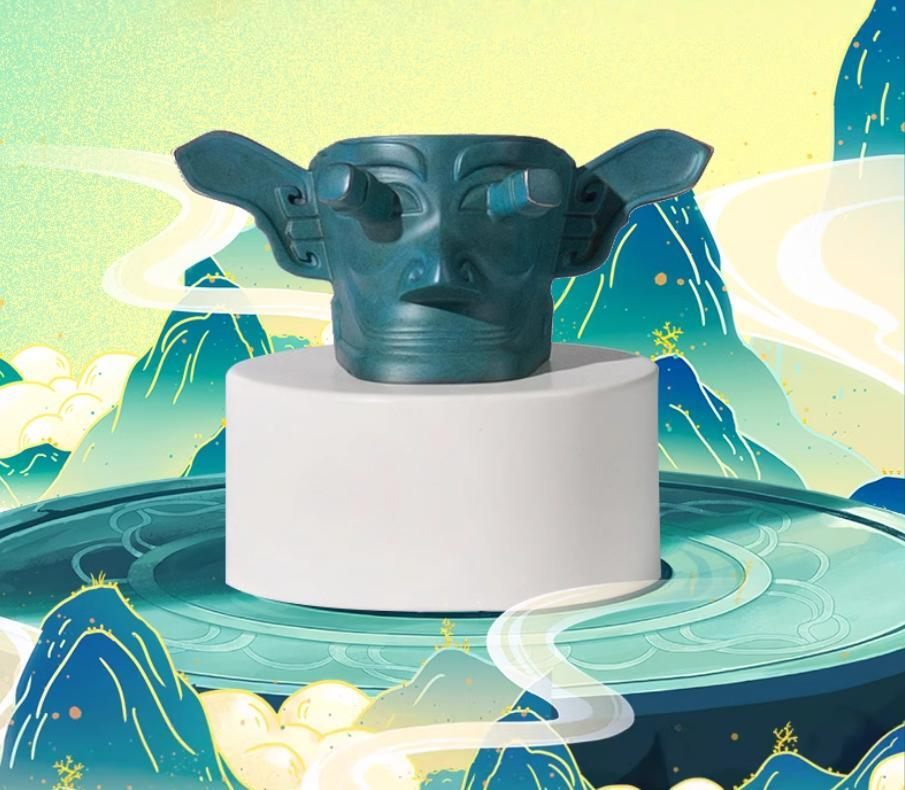

The Day Two Bronzes Emerged from the Earth
July 1974. Zhengzhou, China. A routine construction site transformed into one of the most dramatic Shang dynasty bronze discovery story moments in Chinese archaeology history. As workers dug foundations for a new building, their shovels struck something metallic—not once, but twice. What they uncovered would become known as the Du Ling Square Ding twins: two massive ancient Chinese bronze vessel pieces that would rewrite understanding of Shang dynasty royal bronze culture.
This 1974 China archaeological find bronze wasn't just another bronze vessel excavation China 1970s statistic. It was a bronze vessel found during construction China that revealed an extraordinary Chinese bronze ding two pieces mystery. Two nearly identical square ding vessels, buried side by side, waiting 3500 years to tell their story. The Zhengzhou ancient capital bronze artifacts discovery sent shockwaves through the Chinese bronze age archaeological mysteries community.
The ancient Chinese bronze twins weighed 86.4 and 82.3 kilograms respectively, each towering over 80 centimeters tall. These weren't ordinary ritual bronze objects—they were royal bronze statements of power and authority from the Shang dynasty capital Zhengzhou. The bronze vessel excavation revealed taotie pattern decorations so intricate, so perfectly executed, that they demonstrated Shang dynasty bronze artisan techniques at their absolute zenith.
The Capital of Bronze Kings
To comprehend the Du Ling Square Ding significance, we must understand Zhengzhou's role as the heart of Shang dynasty power. This ancient capital served as the political and spiritual center during the Erligang period, when Chinese bronze age civilization reached unprecedented sophistication. The Shang dynasty capital Zhengzhou artifacts discovered here reveal a society obsessed with bronze vessel production as expressions of political authority.
Chinese archaeology teams identified the discovery site as part of a larger archaeological site complex. This wasn't random burial—it was deliberate placement of royal bronze collection museum quality vessels. The bronze vessel excavation China 1970s context suggested these ding pieces accompanied someone of extraordinary status into the afterlife. Perhaps a Shang king, perhaps a high priest, perhaps both.
The Zhengzhou Shang City archaeological evidence reveals an entire bronze production system operating under strict social hierarchy controls. Only the elite accessed these Chinese bronze ding royal power symbol vessels. The square ding form itself communicated power symbolism—earth, stability, imperial mandate. When you possessed a bronze ding this massive, you weren't just wealthy; you were divinely ordained to rule.
The Taotie Mystery: Monster Faces That Protected Kings
The Du Ling Square Ding surfaces blaze with taotie pattern decorations—those enigmatic monster face design motifs that have fascinated Chinese bronze scholars for generations. The taotie motif appears as symmetrical ancient Chinese bronze monster face design elements, staring eternally from the bronze vessel surface with hypnotic intensity.
What does the taotie pattern meaning represent? This question fuels endless Chinese bronze age archaeological mysteries debates. Some Chinese archaeology experts argue the taotie mask represents protective spirits guarding the ritual bronze contents. Others suggest ancient Chinese bronze monster face design embodies the mysterious boundary between human and divine realms. The mysterious Chinese bronze patterns decoded remain partially undeciphered, adding layers of intrigue.
The taotie motif Chinese bronze art meaning operates on multiple symbolic levels simultaneously. During ancestor worship ritual ceremonies, these monster face designs would have flickered in torchlight, creating an otherworldly atmosphere. The religious significance of taotie pattern decorations transformed the bronze vessel from mere container into spiritual portal. The Shang bronze ritual food vessel purpose transcended physical nourishment—it fed the souls of royal ancestors.
Western view Chinese bronze aesthetics often struggles to comprehend the taotie intensity. Yet for Shang dynasty elites, these bronze vessel faces represented cosmic order, spiritual protection, and dynastic continuity. The artistic interpretation of taotie designs demonstrates Shang dynasty bronze artistic innovation that rivals any ancient civilization's symbolic vocabulary.
The Two Pieces Puzzle: Why Twins?
Here's where the Du Ling Square Ding story becomes truly fascinating. Why two nearly identical bronze vessel pieces? The Chinese bronze ding two pieces mystery has generated multiple theories among Chinese archaeology scholars.
One compelling explanation involves ritual duality in Shang dynasty bronze culture. Ancient Chinese cosmology emphasized complementary pairs—heaven and earth, male and female, yang and yin. The twin bronze vessels might have served complementary ceremonial purpose functions during royal ceremony rituals. One for heaven, one for earth. One for living ancestors, one for departed spirits.
Another theory suggests the two pieces represented different Shang king rulers—perhaps father and son, or successive dynasty leaders. The bronze vessel pairing would then symbolize dynastic continuity, the unbroken chain of political authority passing between generations. The Chinese bronze vessel spiritual meaning explained through this lens reveals sophisticated symbolic meaning encoding.
A third possibility: the dual artifact puzzle reflects Shang dynasty bronze burial customs requiring multiple vessels for complete ancestor worship ritual ceremonies. The religious context demanded specific bronze vessel combinations, and these square ding twins formed the ceremonial core. The Shang bronze vessel religious significance required precise ritual bronze arrangements.
Whatever the explanation, the Chinese bronze ding two pieces mystery adds dramatic intrigue to an already compelling Shang dynasty bronze discovery story. The bronze vessel found during construction China revealed not one treasure, but two—a Chinese bronze age archaeological mysteries double revelation.
The Weight of Power: Why Ancient Chinese Bronze Was So Heavy
Standing before the Du Ling Square Ding, visitors inevitably ask: why ancient Chinese bronze so heavy? At over 80 kilograms each, these bronze vessel pieces demanded enormous resources and labor to create. The Shang dynasty bronze weight symbolism wasn't accidental—it was deliberate power symbolism communication.
The ancient Chinese bronze weight served multiple symbolic meaning purposes. First, it demonstrated the ruler's ability to command vast bronze production system resources. Only someone controlling extensive ancient Chinese metal casting bronze age operations could commission such massive size ritual bronze vessels. The bronze vessel weight literally embodied political authority.
Second, the heavy bronze communicated permanence and stability. These square ding pieces weren't meant to move easily—they anchored royal ceremony spaces, physically grounding spiritual meaning in tangible form. The Shang dynasty bronze weight made the bronze vessel immovable monuments to dynastic power.
Third, the ancient Chinese bronze mass served practical ceremonial purpose functions. Heavy bronze vessel pieces retained heat longer during ritual bronze food offerings, keeping ancestral meals warm throughout extended ancestor worship ritual ceremonies. The Shang bronze ritual food vessel purpose combined practical and symbolic considerations seamlessly.
The why ancient Chinese bronze so heavy question reveals how Shang dynasty bronze culture integrated material properties with symbolic meaning sophistication. Every kilogram communicated power and authority.
The Technology Secret: How Ancient Chinese Made Bronze Ding
Creating Du Ling Square Ding level ancient Chinese bronze masterpieces required Shang dynasty bronze manufacturing techniques that remained unsurpassed for millennia. The how ancient Chinese made bronze ding process involved extraordinarily complex piece-mold casting technology.
Artisans began by crafting a clay model of the desired bronze vessel shape. This model was then covered with clay sections that, when dried, formed the outer mold. The model was shaved away, creating a cavity. Intricate taotie pattern designs were carved into the mold sections—a bronze vessel surface decoration techniques demanding extraordinary artistic precision.
The ancient Chinese bronze casting technique secret lay in mold assembly. Hundreds of clay sections had to fit perfectly, sealed with clay paste to prevent molten bronze leakage. The bronze casting temperature exceeded 1000°C, requiring sophisticated kiln technology. When molten bronze poured into the assembled mold, it had to fill every taotie motif detail simultaneously.
The Shang dynasty bronze artisan techniques included precise alloy recipes: approximately 85% copper, 10% tin, 5% lead. This ancient Chinese metal casting bronze age formula optimized bronze casting fluidity while ensuring final bronze vessel durability. The Chinese bronze age metallurgical knowledge represented ancient technology sophistication rivaling any contemporary civilization.
The how ancient Chinese made bronze ding technical mastery explains why Du Ling Square Ding pieces survived 3500 years. These bronze vessel twins weren't lucky accidents—they were engineered masterpieces of ancient Chinese bronze craftsmanship.
From Construction Site to National Treasure
The 1974 China archaeological find bronze journey from bronze vessel excavation site to National Museum of China and Henan Museum reflects China's evolving cultural heritage preservation commitment. The bronze vessel found during construction China initially faced uncertainty during the Cultural Revolution period.
Fortunately, Chinese archaeology professionals recognized the Du Ling Square Ding significance immediately. The Shang dynasty bronze discovery story triggered emergency archaeological site protocols. Careful bronze vessel excavation procedures extracted both twin bronze pieces without damage—a Chinese bronze age archaeological mysteries preservation triumph.
Today, one Du Ling Square Ding resides in the National Museum of China Beijing collection, the other in Henan Museum Zhengzhou. This Shang dynasty royal bronze collection museum distribution allows broader public access to these Chinese bronze ding treasures. The bronze vessel twins serve as museum artifact centerpieces, drawing high-net-worth cultural tourists from worldwide.
The Chinese bronze age archaeological mysteries surrounding these ancient Chinese bronze vessel pieces continues attracting Chinese archaeology research. New bronze vessel analysis techniques reveal additional Shang dynasty bronze manufacturing details, expanding our ancient Chinese bronze understanding.
The Enduring Legacy of the Twin Dings
The Du Ling Square Ding legacy extends far beyond museum exhibition display cases. These ancient Chinese bronze vessel twins represent humanity's capacity for artistic achievement, technical innovation, and spiritual expression. The Shang dynasty bronze craftsmanship demonstrates ancient technology sophistication that continues inspiring modern bronze casting artisans.
For collectors and cultural artifact enthusiasts, the Du Ling Square Ding embodies Chinese bronze age civilization at its zenith. The taotie pattern mystery, the two pieces puzzle, the dramatic 1974 China archaeological find bronze discovery story—each element adds layers of fascination. The bronze vessel found during construction China reminds us that history's greatest treasures often emerge unexpectedly.
The Chinese bronze ding royal power symbol significance transcends its original ceremonial purpose context. Today, these ancient Chinese bronze masterpieces communicate universal themes: power's impermanence, art's endurance, civilization's continuity. The Du Ling Square Ding twins stand as eternal witnesses to Shang dynasty ambition, creativity, and spiritual depth.
As Chinese archaeology continues unlocking Shang dynasty bronze secrets, the Du Ling Square Ding will undoubtedly reveal additional mysterious Chinese bronze patterns decoded insights. The bronze vessel twins have waited 3500 years—they can wait a bit longer for humanity to fully comprehend their symbolic meaning magnificence.
The ancient Chinese bronze vessel discovery that shook Chinese archaeology in 1974 continues shaking us today. The Du Ling Square Ding twins remain, after all these centuries, still speaking—still challenging us to understand the depths of Chinese civilization's artistic, technical, and spiritual achievements. In their taotie stares, we find not just decoration, but a window into ancient China's soul itself.