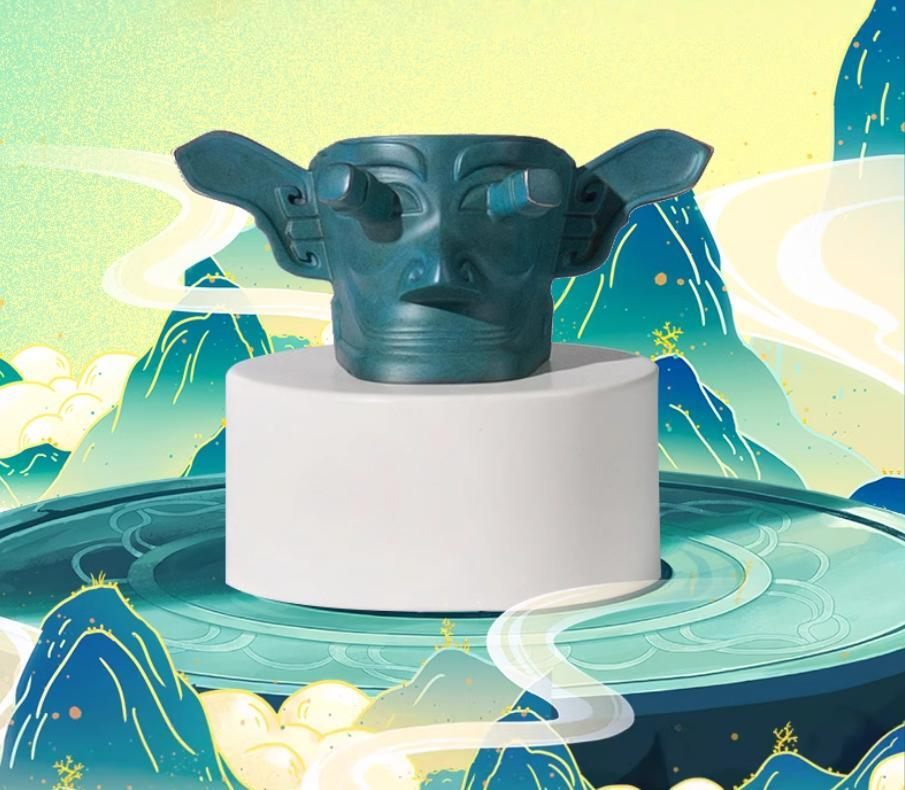

The Axe with a Soul: When Bronze Faces Commanded Armies
In the shadowed chambers of a Shang Dynasty tomb, buried for over 3,200 years, lay a bronze axe unlike any other. When archaeologists unearthed the Ya Choul yue from Subutun, Shandong in 1965, they discovered more than a ceremonial weapon - they found a Chinese bronze face sculpture art masterpiece that would challenge Western understanding of ancient Chinese weapon aesthetics forever.
The Ya Choul bronze axe bears a haunting human face motif - a decorative pattern so sophisticated, so psychologically potent, that it transcends mere surface decoration to become artistic symbolism of the highest order. This ancient Chinese bronze mask weapon is not simply a tool of war or ritual object. It is a sculptural masterpiece that embodies the artistic achievement of Shang Dynasty bronze artistry at its most mysterious and powerful.
The Yachou inscription - those enigmatic characters that name the axe's owner - add another layer of artistic intrigue. Who was Ya Choul? A military commander? A square state ruler? A priest-king whose sacred weapon mediated between earth and heaven? The artistic mystery deepens with every examination of this Chinese bronze ritual weapon art marvel.
The Human Face in Bronze: Artistic Innovation Beyond Compare
The human face design on the Ya Choul yue represents one of the most extraordinary artistic innovations in the entire Chinese bronze age. While taotie patterns dominated Shang Dynasty bronze decorative motifs, the Ya Choul axe dares something bolder: a recognizable human face, rendered with startling realism and artistic sophistication.
From a Western art historical perspective, this bronze face art parallels the sculptural traditions of ancient Egypt or Mycenaean Greece - civilizations that also created human face representations in metal art. But the Ya Choul bronze achieves something uniquely Chinese: the integration of portrait art with weapon design, creating a visual power that is at once intimate and terrifying.
The artistic technique required to create this human face motif on a bronze weapon was extraordinary. The bronze casting process had to capture subtle facial features - eyes, nose, mouth, expression - while maintaining the structural integrity of a functional battle axe. The ancient Chinese metal face sculpture demonstrates technical artistry that rivals the finest bronze age work anywhere in the world.
The facial expression on the Ya Choul axe has been variously interpreted as serene, fierce, or transcendent - a testament to its artistic complexity. This ambiguity is likely intentional, part of the design philosophy that made Shang Dynasty bronze art so psychologically effective. The face watches, judges, protects - its artistic meaning shifting with the viewer's perspective and purpose.
The Art of Intimidation: Psychological Power Through Aesthetic Design
The Ya Choul bronze axe exemplifies the Shang Dynasty understanding that artistic beauty could serve as psychological warfare. When an enemy warrior confronted this ceremonial weapon in battle, they faced not just a blade, but a human face cast in sacred bronze - a visual authority statement that transcended mere military equipment.
This ancient Chinese weapon artistic style employed what modern art historians might call "aesthetic intimidation." The human face design, gleaming in the sun, staring unblinkingly at opponents, created an immediate psychological impact. The artistic symbolism was clear: this weapon was not merely wielded by a man; it was animated by something greater - ancestral spirits, divine power, the very face of Shang Dynasty authority.
The Chinese bronze axe artistic pattern of the Ya Choul yue operates on multiple artistic levels simultaneously. As decorative art, it displays extraordinary craftsmanship and aesthetic sensibility. As ritual art, it connects the wielder to spiritual forces. As psychological weapon, it demoralizes enemies through its unsettling visual presence. This multi-dimensional artistic achievement is what makes the Ya Choul axe such an extraordinary example of ancient Chinese bronze artistic innovation.
The artistic heritage of this approach extends throughout Chinese military history. Later dynasties would continue the tradition of decorating weapons with fierce faces, mythical creatures, and protective symbols - all descendants of the artistic philosophy embodied in the Ya Choul bronze.
The Yachou Inscription: Artistic Mystery and Historical Enigma
The Yachou inscription carved into the bronze axe adds another dimension of artistic intrigue to this already mysterious artifact. These ancient characters - Ya Choul - represent a name, a title, perhaps a square state designation. But their precise artistic meaning and historical reference remain subjects of scholarly debate.
From an artistic analysis perspective, the inscription placement and calligraphic style demonstrate sophisticated design philosophy. The characters are integrated into the overall visual design of the axe, becoming part of the decorative composition rather than mere identification marks. This integration of text and image reflects advanced artistic thinking about the relationship between written language and visual art.
The mystery of Ya Choul's identity enhances the artistic allure of the axe. Was this a military commander whose personal weapon bore his name? A square state ruler asserting authority through artistic patronage? A priest-king whose sacred weapon required both human face and inscribed name to function properly in ritual contexts?
The artistic significance of the Yachou inscription extends beyond its historical content. It represents early Chinese calligraphic art integrated with sculptural design - a precursor to the later Chinese artistic tradition of combining poetry, calligraphy, and visual art into unified artistic statements.
The Subutun Discovery: Art Resurrected from Shandong Soil
The 1965 archaeological excavation at Subutun, Shandong that revealed the Ya Choul bronze axe was one of the most significant Chinese bronze age discoveries of the 20th century. The artistic preservation of this ancient bronze masterpiece, after over three millennia underground, allowed modern art historians to study Shang Dynasty bronze artistry with unprecedented clarity.
The Subutun tomb complex yielded multiple bronze artifacts, but the Ya Choul yue stood out for its unique human face design. The artistic analysis of this find revolutionized understanding of Shang Dynasty decorative arts, proving that human representation in Chinese bronze age art was far more sophisticated than previously believed.
The archaeological context of the Ya Choul axe - buried with other ritual bronzes, weapons, and ceremonial objects - suggests it belonged to someone of extraordinary importance. The artistic quality of the accompanying artifacts confirms this: only the highest elite could command such artistic resources, such technical mastery, such creative vision.
Today, the Ya Choul bronze resides in the Shandong Museum, where it continues to captivate visitors with its artistic power. The museum artifact status ensures its artistic heritage will be preserved for future generations, while artistic scholarship continues to decode its symbolic meaning and historical significance.
The Square State Connection: Regional Art in Imperial Context
The Ya Choul axe may represent square state artistic production rather than central Shang Dynasty work - a possibility that adds fascinating dimensions to its artistic interpretation. The Shandong region, where Subutun is located, was home to various square states that maintained complex relationships with the Shang central authority.
If the Ya Choul bronze is indeed square state art, it demonstrates the remarkable artistic sophistication possible outside the Shang capital. The human face motif, the technical artistry, the aesthetic achievement - all equal or exceed central Shang bronze work. This challenges traditional art historical assumptions about artistic production in the Chinese bronze age.
The artistic style of the Ya Choul axe shows both Shang Dynasty influence and regional variation. The bronze casting technique follows Shang methods, but the human face design may reflect local artistic traditions, local aesthetic preferences, local cultural values. This artistic synthesis - central technique meeting regional vision - creates something uniquely powerful.
The political symbolism of a square state ruler's ceremonial weapon bearing such extraordinary artistic merit cannot be overstated. It declares that artistic excellence was not the exclusive domain of the Shang king - that regional powers could command equal artistic resources, equal technical mastery, equal creative vision.
The Ritual Function: Sacred Art in Ceremonial Context
The Ya Choul bronze axe served not merely as military equipment but as ritual art of the highest order. In Shang Dynasty religious practice, weapons like the yue played crucial roles in sacrificial ceremonies, ancestral worship, and divination rituals. The human face motif transformed this ceremonial weapon into a conduit between human and divine realms.
The artistic symbolism of the human face in ritual contexts would have been profound. Ancestors were central to Shang religious belief - the dead continued to influence the living, requiring regular sacrificial offerings and ritual attention. A weapon bearing a human face might represent an ancestral spirit, lending spiritual authority to the wielder's actions.
The sacred weapon status of the Ya Choul axe elevated it from functional object to artistic masterpiece with religious significance. The artistic beauty was not incidental but essential - a beautifully crafted weapon was more likely to attract ancestral attention, to function effectively in ritual ceremonies, to mediate properly between earthly and spiritual powers.
This ritual art dimension explains the extraordinary artistic investment in the Ya Choul bronze. Such technical artistry, such aesthetic refinement, such creative innovation served not vanity but spiritual efficacy. The artistic achievement was itself a form of religious devotion.
The Artistic Legacy: Face of Power Across Millennia
The artistic heritage of the Ya Choul bronze axe extends far beyond its historical moment. This ancient Chinese bronze artistic achievement influenced subsequent Chinese art traditions, establishing aesthetic principles that would resonate through centuries of Chinese decorative arts.
The human face motif, so boldly realized on the Ya Choul yue, appears in later Chinese art - in Han Dynasty tomb sculptures, in Buddhist bronze statues, in imperial portrait art. The artistic innovation of representing recognizable human features in bronze media began with masterpieces like the Ya Choul axe.
From a global art history perspective, the Ya Choul bronze stands among the greatest face sculptures of the ancient world. Compare it to the golden mask of Tutankhamun, the Lion Gate of Mycenae, the colossal heads of Olmec Mexico - each represents a civilization's artistic achievement in rendering the human face with power and permanence.
The artistic mystery of the Ya Choul inscription continues to inspire scholarly research, artistic interpretation, and popular imagination. Who was Ya Choul? What did this face mean to its creator, its owner, its original viewers? These unanswered questions enhance rather than diminish the artistic power of the piece.
The Modern Encounter: Ancient Art in Contemporary Eyes
When modern viewers encounter the Ya Choul bronze axe in the Shandong Museum, they experience something extraordinary: direct contact with artistic genius from 3,200 years ago. The human face stares back across millennia, its artistic expression as potent now as in the Shang Dynasty.
The artistic analysis of the Ya Choul axe continues to evolve with new scholarly methods, new technological tools, new art historical frameworks. Scientific analysis reveals details of the bronze casting process. Comparative studies place it in broader artistic contexts. Theoretical approaches decode its symbolic meaning.
The artistic influence of the Ya Choul bronze extends into contemporary Chinese art movements. Modern sculptors, designers, and visual artists draw inspiration from its human face design, its artistic boldness, its technical mastery. The artistic heritage lives on, transformed but recognizable.
For Western audiences encountering Chinese bronze age art for the first time, the Ya Choul axe serves as powerful introduction. The human face provides immediate artistic accessibility - we recognize ourselves in that ancient countenance, bridging the cultural gap between Shang Dynasty China and the modern world.
Conclusion: The Eternal Face of Artistic Power
The Ya Choul bronze axe endures as testament to the artistic achievement possible when technical mastery, creative vision, and cultural significance converge. This ancient Chinese bronze weapon is not merely historical artifact - it is artistic masterpiece that continues to speak across three millennia, declaring that true power lies in creating beauty that transcends time itself.
The human face on the Ya Choul yue is more than decoration. It is artistic statement, spiritual conduit, psychological weapon, historical document. It represents the artistic sophistication of Shang Dynasty civilization, the creative boldness of unknown artisan masters, the enduring power of artistic excellence.
When we stand before the Ya Choul bronze today, we witness something miraculous: the survival of artistic vision across the abyss of time. The face that once terrified Shang Dynasty enemies now inspires modern viewers. The artistic achievement that proclaimed ancient power now testifies to eternal truth - that great art transcends its original purpose to become something immortal.
The Ya Choul axe reminds us that artistic beauty is the most enduring form of power. Empires fall, names fade, battles are forgotten - but artistic masterpieces like the Ya Choul bronze endure, speaking to us across the centuries with undiminished voice, undiminished power, undiminished beauty.