The Discovery That Rewrote Art History
In the humid summer of 1986, something extraordinary emerged from the earth of Sichuan Province that would forever alter our understanding of ancient Chinese bronze art. Workers at a brick factory in Guanghan stumbled upon fragments of a bronze altar so sophisticated, so artistically profound, that it seemed to belong to a civilization far more advanced than historians had imagined possible.
The Sanxingdui Bronze Altar wasn't found intact. Like a puzzle scattered across time, its pieces lay buried in multiple sacrificial pits, waiting three millennia for patient hands to reassemble them. What emerged was a ritual bronze vessel of unprecedented complexity—a multi-tiered sacred vessel that speaks to us across the ages about beauty, power, and humanity's eternal quest to touch the divine.
This is not merely an archaeological artifact. This is ancient Chinese bronze art at its most breathtaking—a testament to a lost Chinese kingdom that mastered bronze casting artistic technique with a sophistication that rivals, and perhaps surpasses, anything produced in the ancient Mediterranean world.
A Civilization Without a Name: The Mystery of Ancient Shu
To understand the artistic achievement significance of the Sanxingdui bronze altar, we must first confront one of archaeology's greatest mysteries: the civilization that created it left no written records.
While the Shang Dynasty was inscribing oracle bones in Anyang, developing China's first verified writing system, the artisans of ancient Shu were channeling their cosmic vision directly into bronze sculpture aesthetics. No texts explain their symbols. No royal chronicles record their kings. Only the ritual object artistic value remains—speaking in a visual language so powerful it transcends the need for words.
This absence of text creates what art historians call a "cognitive disruption"—a moment when Western audiences realize that Chinese bronze age visual culture operated on entirely different principles than the Greco-Roman traditions that dominate our understanding of ancient ritual art. The Sanxingdui art style demands we abandon our preconceptions and encounter sacred art ancient China on its own terms.
Deconstructing the Altar: Western Art Analysis Meets Eastern Spirituality
The Architecture of the Cosmos
From a Western art historical perspective, the Sanxingdui bronze altar exemplifies what we might call hierarchical composition—a spatial composition design where each tier represents a different realm of existence. But this isn't merely aesthetic hierarchy; it's cosmological architecture.
The bronze altar consists of three distinct levels:
The Base: Earth and Foundation
The square foundation represents the terrestrial realm, adorned with taotie design patterns and cloud thunder pattern motifs that pulse with rhythmic energy. In Chinese bronze age aesthetic philosophy, the square symbolizes earth—stable, grounded, the foundation of all existence. The zoomorphic bronze design elements here aren't decorative; they're protective, warding off chaotic forces.
The Middle Tier: The Human-Divine Interface
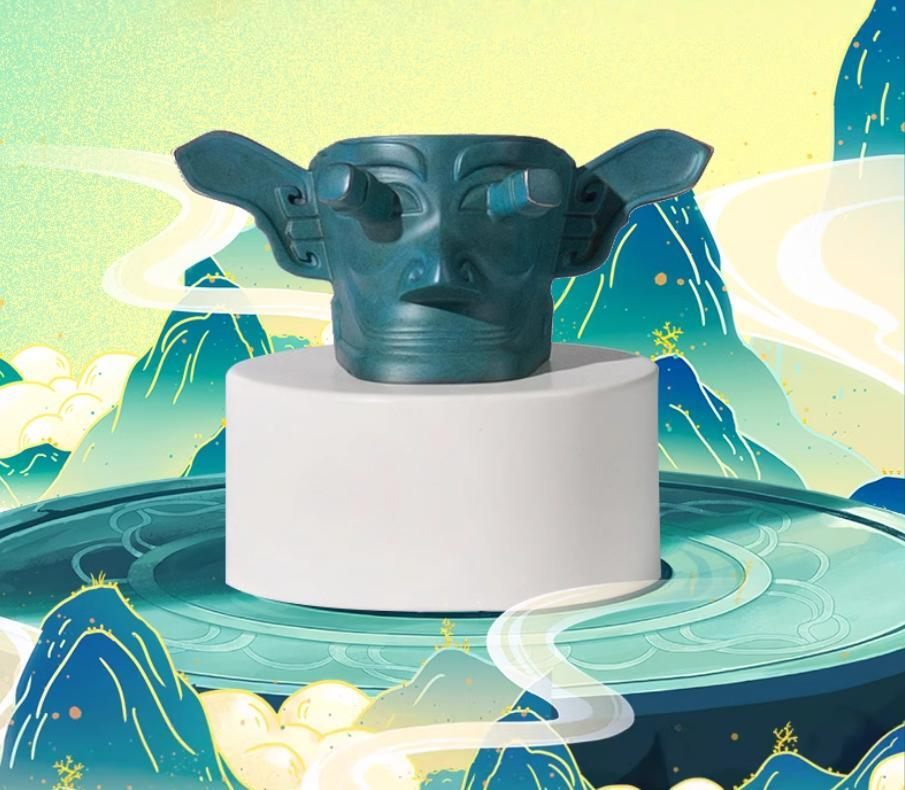
Here we find shamanic vision art at its most explicit. Divine imagery takes form in humanoid figures with exaggerated features—enlarged eyes that see beyond the mortal realm, ears that hear the whispers of spirits. This is ancestral worship art made manifest, a ritual platform where shamans could bridge the gap between worlds.
The Upper Tier: The Celestial Realm
Though partially damaged, the top section likely supported either a cosmic mountain symbolism element or a representation of the axis mundi concept—the world tree or pillar connecting heaven, earth, and the underworld. This sacred geometry bronze structure transforms the altar into a microcosm of the universe itself.
The Aesthetic of Power
What makes Sanxingdui bronze craftsmanship techniques so remarkable is how they achieve what Western art would call "monumentality" in miniature. Standing perhaps 50-80 centimeters tall, the bronze altar commands the same psychological presence as a cathedral spire.
This effect comes from several artistic innovation choices:
Exaggerated Proportions: The Sanxingdui mask artistic interpretation tradition—those haunting, alien-like faces with protruding eyes—appears throughout the altar's decorative scheme. These aren't portraits; they're expressions of spiritual meaning made visible. The enlarged eyes represent divine sight, the ability to perceive truths invisible to ordinary humans.
Surface Complexity: Every inch of the bronze surface decoration serves a purpose. The taotie motif—that enigmatic creature-face pattern that dominates Chinese bronze decorative patterns meaning—isn't random ornamentation. Each ritual bronze vessels element encodes mythological creature art references that would have been instantly readable to ancient viewers.
Multi-Layer Symbolism: The Chinese bronze multi-layer composition creates a visual experience that changes as you move around it. From different angles, different divine imagery art elements come into focus—a deliberate artistic technique that mirrors the multi-layered nature of spiritual revelation itself.
Casting Beauty: The Technical Mastery Behind the Art
To fully appreciate the Sanxingdui artistic achievement, we must understand the bronze casting ancient China methods that made it possible. This isn't just craft; it's artistic technique elevated to transcendent levels.
The Piece Mold Revolution
While Mesopotamian artisans were using lost-wax casting, Chinese bronze age craftsmen developed something entirely different: the piece mold technique (also called section mold casting). This bronze casting artistic technique allowed for:
- Intricate Surface Detail: The Sanxingdui bronze surface decoration achieves a level of intricacy that would be impossible with lost-wax methods
- Modular Construction: Different altar sections could be cast separately and assembled, enabling the complex hierarchical composition
- Reproducibility: Multiple identical ritual objects could be created for different ceremonial contexts
The patina bronze surface we see today—the green-blue oxidation that gives ancient Chinese bronze art its distinctive character—isn't deterioration. It's the final transformation, the bronze completing its journey from earthly metal to sacred vessel.
The Artistic Choices
Every Chinese bronze casting artistic technique decision reflects aesthetic philosophy. The thick walls, the weight, the specific alloy ratios—these aren't just technical requirements. They're artistic value statements about permanence, power, and the eternal nature of the divine.
When we examine the Sanxingdui bronze craftsmanship techniques, we're not just looking at ancient technology. We're witnessing ancient Chinese art spiritual meaning encoded in metal.
Sanxingdui Art vs. Egyptian Art: A Dialogue Across Civilizations
One of the most compelling ways to understand Sanxingdui art style explained is through comparison with another great bronze age civilization: Egypt.
Similarities That Speak to Universal Truths:
- Both cultures created ritual platform structures for communicating with the divine
- Both used sacred geometry to encode cosmological beliefs
- Both developed zoomorphic bronze design traditions blending human and animal features
- Both saw artistic achievement as service to eternal truths, not individual expression
Differences That Reveal Cultural Uniqueness:
- Egyptian art追求永恒与秩序,while Sanxingdui art embraces mystery and transformation
- Egyptian bronze work served clearly documented religious texts; Sanxingdui bronze art speaks without words
- Egyptian hierarchy was rigid and codified; Sanxingdui spiritual meaning appears more fluid, shamanic
- Egyptian artistic technique emphasized permanence; Sanxingdui artistic innovation included deliberate fragmentation and burial
This Sanxingdui art vs Egyptian art comparison reveals something profound: the ancient Chinese bronze art tradition represents an entirely independent path to sacred art excellence. It's not derivative. It's not "influenced by." It's a parallel achievement—equally sophisticated, equally profound, equally worthy of our awe.
The Shaman's Canvas: Reading the Symbolic Language
To truly appreciate the Sanxingdui bronze altar as ancient Chinese ritual art meaning, we must learn to read its symbolic vocabulary.
The Eye Motif: Seeing Beyond
The most striking feature of Sanxingdui divine imagery art is the emphasis on eyes. Those bulging, cylindrical eyes that seem to stare across millennia aren't stylistic quirks. They're shamanistic art symbols representing:
- Divine Vision: The ability to perceive spiritual truths
- Surveillance: The watchful presence of ancestors and gods
- Awakening: The moment of spiritual enlightenment
In Chinese bronze age visual culture, to see is to know. The Sanxingdui mask artistic interpretation tradition makes this explicit—enlarged eyes = enlarged understanding.
The Animal-Spirit Hybrid: Bridging Realms
The mythological creature art populating the altar's tiers aren't fantasy creatures. They're shamanic vision art representations of spirit guides—animals that can travel between worlds.
Dragons ascend to heaven. Tigers traverse the earth. Birds carry messages between realms. Each zoomorphic bronze design element serves as a ritual object component, enabling the altar to function as a communication with gods device.
The Geometric Code: Order from Chaos
The cloud thunder pattern and taotie motif that cover every surface aren't decoration. They're sacred geometry bronze elements that impose cosmic order on chaotic material reality.
In Chinese bronze age aesthetic philosophy, pattern isn't ornament—it's ontology. The bronze altar decorative patterns meaning literally creates the reality it represents.
From Ritual Object to Museum Masterpiece: The Altar's Journey
The Sanxingdui bronze altar has traveled far from its sacrificial pit origins. Today, it resides in the Sanxingdui Museum, where millions encounter its artistic value annually.
This transformation—from sacred vessel to museum collection centerpiece—raises profound questions about ancient Chinese art museum collection practices:
What Do We Lose?
When a ritual bronze vessels object becomes a Chinese bronze art investment value asset, do we lose access to its original spiritual meaning? Can we truly appreciate ancestral worship art in a glass case?
What Do We Gain?
The Sanxingdui Museum makes ancient Chinese bronze art accessible to global audiences. The altar becomes a bridge between cultures, a ritual object artistic value that speaks to universal human experiences.
The Collector's Perspective
For those who study Chinese bronze art investment value, the Sanxingdui bronze altar represents the pinnacle of ritual bronze vessel art appraisal. Its artistic achievement significance transcends market value, yet it remains one of the most coveted categories in Sotheby's Asian Art auction and Christie's Chinese bronzes sales.
Why This Masterpiece Remains Unknown in the West
Here we confront an uncomfortable truth: despite its artistic achievement significance, the Sanxingdui bronze altar remains virtually unknown to Western audiences. Why does Chinese bronze art remain so underappreciated in global ancient art discourse?
Historical Accident: The 1986 Sanxingdui discovery came late—after Western art history narratives had already crystallized around Mediterranean civilizations.
Language Barriers: Most Sanxingdui archaeological evidence research remains in Chinese, limiting Western art scholarly engagement.
Cultural Distance: The cognitive disruption triggered by Sanxingdui art style challenges Western categories so fundamentally that many observers simply look away.
Market Dynamics: Until recently, Chinese bronze age artifacts remained largely in Chinese museum collection institutions, limiting physical access for Western art historians and collectors.
But this is changing. The Sanxingdui 2021 excavation captured global media attention. Metropolitan Museum Asian Art and Freer Gallery Chinese Art have expanded their Chinese bronze exhibitions. Arthur M Sackler Gallery programming increasingly features Sanxingdui materials.
The altar is finally receiving the artistic interpretation it deserves—not as exotic curiosity, but as ancient Chinese bronze art masterpiece worthy of comparison with any bronze age achievement.
The Living Legacy: How Sanxingdui Influences Contemporary Art
The Sanxingdui artistic influence modern art extends far beyond academic circles. Contemporary artists worldwide are engaging with Sanxingdui art style in provocative ways:
Chinese Contemporary Artists: Many are reclaiming ancient Chinese art traditions, using Sanxingdui bronze altar imagery to explore questions of cultural identity and spiritual meaning in modern contexts.
Western Sculptors: The Sanxingdui mask artistic interpretation aesthetic has influenced bronze sculpture creators seeking alternatives to Greco-Roman traditions.
Digital Artists: The hierarchical composition and sacred geometry bronze elements translate remarkably well into digital art and virtual reality experiences.
This artistic innovation continuity proves that Sanxingdui bronze craftsmanship techniques aren't dead history. They're living artistic technique traditions that continue to inspire, challenge, and transform.
Encountering the Altar: A Visitor's Guide
For those fortunate enough to visit the Sanxingdui Museum in Sichuan Guanghan, encountering the bronze altar in person is transformative.
What to Look For:
- The patina bronze surface coloration—each shade tells a story of burial and transformation
- The multi-layer composition depth—walk around the altar to see how divine imagery shifts
- The taotie design details—use magnification if available to appreciate the bronze surface decoration intricacy
- The spatial composition design—notice how the altar creates its own sacred space
Best Viewing Practices:
- Allow time for your eyes to adjust to the Chinese bronze age visual culture aesthetic
- Read the archaeological evidence displays to understand the sacrificial pit context
- Consider booking a guided tour focusing on artistic interpretation rather than just historical facts
The altar rewards patient observation. This isn't art to consume quickly. It's sacred art ancient China that demands contemplation.
The Unfinished Story: What We Still Don't Know
Despite decades of Sanxingdui archaeological evidence research, fundamental questions remain:
Who Made It?
We don't know the names of the bronze casting ancient China masters who created the altar. Their artistic achievement survives; their identities don't.
Why Was It Buried?
The altar wasn't lost. It was deliberately fragmented and interred in a sacrificial pit. Was this routine ritual bronze vessels practice? Response to crisis? We simply don't know.
What Did It Mean?
Without texts, we're interpreting Sanxingdui spiritual meaning through comparative analysis. Our understanding remains provisional, incomplete.
Where Are the Others?
The altar we have is reconstructed from fragments. Were there others? Are more waiting to be discovered in future Sanxingdui excavation seasons?
These unknowns aren't weaknesses. They're invitations—to curiosity, to humility, to continued engagement with ancient Chinese bronze art mysteries.
Conclusion: The Altar That Speaks Across Time
The Sanxingdui Bronze Altar stands as testament to human artistic achievement at its most profound. It challenges our assumptions about bronze age civilization. It expands our understanding of what sacred art can accomplish. It reminds us that ancient Chinese art deserves its place alongside Egypt, Mesopotamia, and Greece in the pantheon of world artistic innovation.
This isn't just archaeological mystery. This is art that continues to speak—about beauty, about power, about humanity's eternal reach toward the divine. The altar survived three millennia of burial to reach us. The least we can do is listen.
When you encounter the Sanxingdui bronze altar, whether in person at the Sanxingdui Museum or through images and descriptions, remember: you're not looking at a relic. You're encountering a masterpiece of ancient Chinese bronze art that has something to teach us about what it means to be human, to create, to worship, to reach beyond the limits of the mortal realm.
The altar speaks. Are we listening?