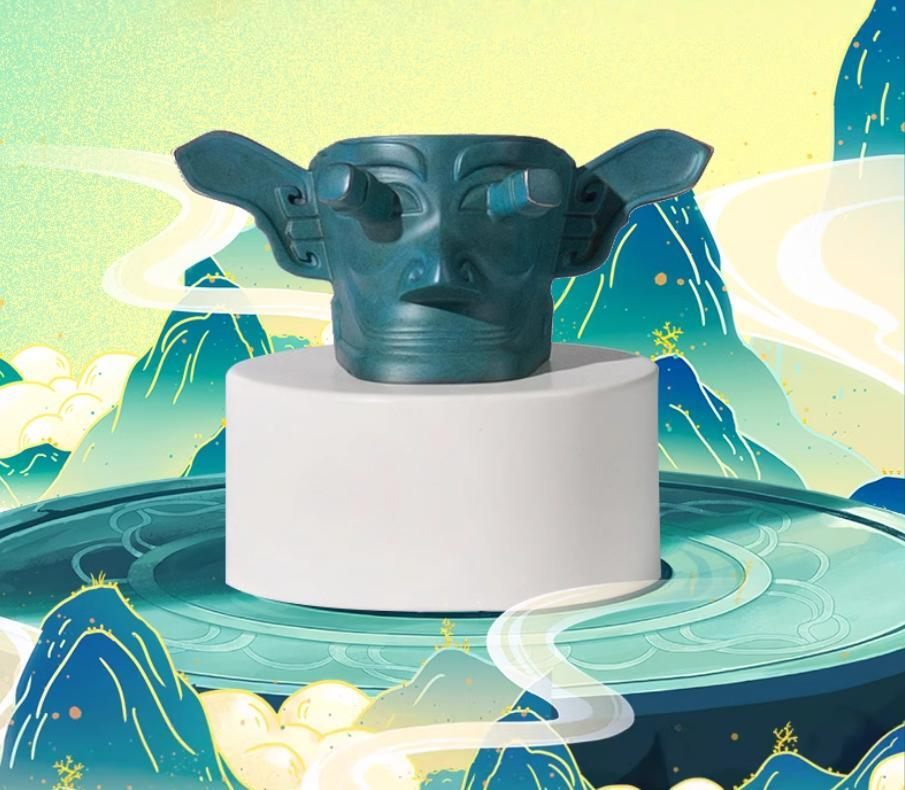

In the dim light of a Shang Dynasty ritual hall, around 1200 BCE, firelight danced across the surface of an extraordinary sculpture. An owl—eyes wide, wings folded, beak slightly parted—stood ready to pour sacred wine. This was no ordinary bird. This was the Fu Hao bronze artistic masterpiece, a Chinese bronze owl sculpture art piece that embodied the spiritual power of a warrior queen and the artistic sophistication of an entire civilization.
Three thousand two hundred years later, this ancient Chinese bronze bird sculpture sits in the National Museum of China, still commanding attention. Visitors pause before its compact form, struck by something they can't quite name. Is it the owl's intense gaze? The intricate patterns covering every surface? The sheer audacity of turning a ritual vessel into a living creature?
This is the story of the Fu_Hao_Owl_Zun, a Shang Dynasty owl bronze design that transcends its function as a wine container to become one of the greatest achievements of ancient bronze owl sculpture China has ever produced. It's a story about Chinese bronze vessel animal shape artistry, about cross-cultural symbolism, and about how a bronze vessel owl shape decoration can speak across millennia to anyone who understands the language of great art.
The Artistic Enigma: Why This Owl Ruled Ancient China
Why this owl ruled ancient China is a question that opens doors to understanding Shang aesthetic philosophy. The owl was not merely decorative—it was sacred. In Shang cosmology, owls were associated with the night, with wisdom, and crucially, with warfare. The bird's silent flight, its nocturnal vision, its predatory precision—all these qualities resonated with a society that valued military prowess and spiritual insight.
The Chinese owl bronze religious meaning connects directly to Fu Hao herself. As a female general who led armies into battle, she would have identified with the owl's hunting prowess. The owl became her spiritual protector, her totem, her symbolic representation in the afterlife. When artisans cast this ancient bronze owl statue China, they weren't creating a generic bird—they were creating Fu Hao's eternal guardian.
Chinese bronze owl war goddess associations run deep in Shang iconography. Unlike later Chinese periods where owls sometimes carried negative connotations, the Shang revered them as powerful spiritual intermediaries. The Shang Dynasty owl symbolism meaning positioned the owl as a creature that could move between worlds—between day and night, between life and death, between the human and divine realms.
The warrior queen's owl protector spirit concept reflects broader Shang beliefs about animal companions in the afterlife. Just as the tomb contained sacrificed humans to serve Fu Hao eternally, the owl zun would serve as her spiritual companion, pouring wine for her eternal banquets and guarding her from malevolent spirits.
Sculptural Excellence: Deconstructing the Owl's Artistic Elements
Shang bronze animal form artistry reached its zenith in zoomorphic vessels like the Fu Hao owl zun. Standing approximately 46 centimeters tall, the sculpture captures an owl in a moment of alert stillness. The head turns slightly, as if the bird has heard something in the darkness. The wings are folded but ready to unfold. The talons grip the base with convincing tension.
Chinese bronze zoomorphic vessel art of this quality required extraordinary technical skill. The artisans used the piece-mold casting technique, creating separate clay molds for each section of the owl, then assembling them for pouring molten bronze. The ancient Chinese bronze casting queen Fu Hao commissioned employed the finest craftsmen of the age, and their work shows in every detail.
Chinese bronze decorative owl pattern work covers the entire surface. Taotie masks—those enigmatic creature faces that dominate Shang bronze decoration—appear on the owl's chest and wings. Thunder patterns (leiwen) fill the background, creating visual texture that catches light from every angle. The Shang bronze owl artistic achievement lies in integrating these decorative elements without overwhelming the bird's naturalistic form.
Ancient bronze owl artistic style balances realism and abstraction brilliantly. The owl's overall shape is immediately recognizable—any viewer knows this is a bird of prey. But the surface decoration transforms it into something more than naturalistic. It becomes a ritual object, a sacred thing, a bridge between the mundane and the divine.
The Chinese bronze artistic bird design demonstrates sophisticated understanding of three-dimensional composition. Viewed from any angle, the owl presents a compelling silhouette. The weight distribution feels correct. The proportions, while slightly stylized, maintain biological plausibility. This is Shang Dynasty art bronze owl master work at its finest.
Cross-Cultural Vision: Western Art Perspectives on Chinese Bronze
Chinese bronze art Western perspective offers fascinating insights. Western viewers unfamiliar with Chinese art often approach these bronzes through the lens of their own traditions. They might compare the owl zun to Egyptian animal-headed deities, to Greek sculptural naturalism, or to modern abstract art. Each comparison reveals something, but misses the essential Shang aesthetic.
How to appreciate Shang bronze requires understanding that these objects operated in a different artistic universe than Western sculpture. Greek art celebrated the human form, pursuing idealized naturalism. Shang art celebrated ritual power, pursuing symbolic intensity. The owl zun isn't trying to look like a real owl—it's trying to embody owl-ness, to capture the spiritual essence of owldom.
Chinese bronze vessel sculptural quality challenges Western categories. Is it sculpture? Yes, but also a functional vessel. Is it decorative art? Yes, but also a ritual instrument. Is it religious icon? Yes, but also a status symbol. This categorical fluidity is precisely what makes Chinese bronze age artistic sophistication so compelling to contemporary audiences accustomed to interdisciplinary art.
Chinese bronze art cross cultural appreciation grows as viewers learn the visual language. The taotie motif, initially strange to Western eyes, becomes recognizable as a key decorative element. The thunder pattern background reads as texture rather than mere ornament. The overall composition reveals itself as carefully balanced, every element serving multiple purposes simultaneously.
The Metropolitan Museum of Art and Freer Gallery of Art in Washington have long displayed Chinese bronzes, introducing Western audiences to this artistic tradition. Curators emphasize the technical achievement, the ritual context, and the aesthetic power. For high-net-worth collectors and art lovers, these pieces represent some of the most sophisticated ancient art ever created.
The Taotie Mystery: Decoding the Owl's Decorative Language
Taotie pattern artistic interpretation bronze work is essential to understanding the owl zun's visual impact. The taotie—a symmetrical creature face with prominent eyes, often lacking a lower jaw—covers the owl's chest and appears on its wings. This motif has fascinated scholars for centuries. What does it mean? Why does it appear on virtually every Shang bronze?
Shang dynasty bronze decorative artistry used the taotie as a protective symbol, a warning, and a display of power. Some scholars suggest it represents a mythical beast that consumes evil. Others propose it's a stylized animal face, perhaps a tiger or buffalo. Still others argue it's purely abstract, a decorative convention without specific referent.
On the Fu Hao tomb bronze artistic collection owl, the taotie serves multiple functions. Decoratively, it breaks up the smooth surface, creating visual interest. Symbolically, it protects the vessel's sacred contents. Artistically, it demonstrates the caster's skill—taotie patterns require precise mold-making and careful finishing.
Chinese bronze vessel monumental sculpture often features taotie as the dominant decorative element. On the owl zun, however, the taotie is secondary to the overall bird form. This subordination of pattern to shape shows artistic maturity—the craftsmen understood that the owl's naturalistic form was the primary statement, and decoration should enhance rather than overwhelm.
The ancient Chinese bronze artistic mystery of the taotie deepens when considering its disappearance. After the Shang Dynasty fell around 1046 BCE, the taotie motif largely vanished from Chinese art. Later bronzes favored different decorative schemes. This suggests the taotie was specifically Shang, tied to their religious and aesthetic worldview in ways we're still deciphering.
Ritual Function Meets Artistic Form: The Vessel's Dual Nature
Ancient Chinese bronze ritual art beauty lies in the seamless integration of form and function. The owl zun is, practically speaking, a wine vessel. During ceremonies, participants would pour liquid into the owl's back, then tip the bird to pour wine from its beak or a hidden spout. This functional requirement shaped the artistic design.
Chinese bronze vessel proportion balance reflects this dual purpose. The owl's body must be large enough to hold a meaningful quantity of wine. The neck and head must be positioned to allow controlled pouring. The base must be stable enough to prevent tipping during ceremonies. Yet within these constraints, artisans created a sculpture of remarkable vitality.
Shang dynasty bronze masterwork collection pieces like the owl zun demonstrate that ritual function didn't limit artistic expression—it inspired it. The requirement that the vessel pour wine led to the owl's forward-leaning posture, which in turn created a sense of alertness and readiness. Functional necessity became artistic virtue.
The ancient Chinese metal art museum piece quality of the owl zun comes from this integration. It's not a sculpture that happens to be hollow. It's a vessel that happens to be sculptural. This distinction matters. The object's primary identity was ritual tool, but its execution elevated it to art.
Chinese bronze texture patina beauty adds another dimension. Over 3,200 years, the bronze has developed a rich green patina, the result of chemical reactions between the metal and burial soil. This patina, far from diminishing the piece, enhances it—adding depth, mystery, and visible evidence of age. Modern conservators carefully preserve this patina as part of the object's history.
The Sacred Bird: Owl Symbolism Across Cultures
Chinese bronze owl sacred bird status invites cross-cultural comparison. Owls appear in mythologies worldwide, almost always associated with wisdom, mystery, and transition. Athena's owl in Greek mythology symbolized wisdom. Native American traditions often saw owls as messengers between worlds. The ancient Chinese bronze artistic tradition similarly positioned the owl as a spiritual intermediary.
Shang bronze religious art symbolism connected the owl to the night, to death, and to military success. The bird's nocturnal habits made it a creature of yin—the dark, feminine, mysterious principle in Chinese cosmology. This yin association may have resonated particularly with Fu Hao, a woman wielding military power in a male-dominated society.
Chinese bronze art Western perspective often misses these symbolic layers. Western viewers see a beautifully crafted bird. They may not recognize the owl's spiritual significance, its connection to warfare, its role as psychopomp (guide of souls). Understanding these layers enriches appreciation of the ancient Chinese bronze artistic achievement.
The Fu Hao bronze artistic legacy includes multiple owl-themed objects from her tomb. The owl zun was not alone—owl motifs appear on other bronzes, on jade carvings, on bone ornaments. This repetition suggests the owl was personally significant to Fu Hao, not merely a generic decorative choice.
Shang dynasty bronze artistic tradition treated animal imagery with remarkable sophistication. Tigers, elephants, water buffalo, and birds all appear in bronze form. Each carried specific symbolic associations. The owl's association with night and warfare made it particularly appropriate for a military commander's ritual equipment.
Technical Mastery: How the Owl Was Cast
Ancient Chinese bronze craftsmanship techniques used for the owl zun represent the pinnacle of Bronze Age metallurgy. The piece-mold casting process began with a clay model of the owl, sculpted in fine detail. This model was then pressed into clay to create negative molds, which were fired to harden them.
Chinese bronze vessel artistic evolution over the Shang Dynasty shows increasing sophistication in this technique. Early Shang bronzes are relatively simple. By Fu Hao's time (late Shang, around 1200 BCE), artisans could cast extraordinarily complex forms with intricate surface decoration. The owl zun demonstrates this mature capability.
Shang bronze visual power impact comes partly from the casting quality. The bronze surface is smooth, the details crisp, the overall form symmetrical. Achieving this required precise temperature control (bronze melts around 950°C), careful timing, and skilled finishing work after casting.
The ancient Chinese bronze artistic innovation of piece-mold casting differed fundamentally from Western lost-wax casting. In piece-mold, the mold is destroyed to release the casting, meaning each bronze is unique. In lost-wax, the wax model melts away, allowing the mold to be reused. This distinction reflects different artistic priorities—Shang artisans valued uniqueness over reproducibility.
Chinese bronze vessel artistic evolution also shows increasing size and complexity. The owl zun is substantial but not the largest Fu Hao bronze. Some vessels in her tomb weigh over 100 kilograms. Casting such massive objects required coordinated labor, substantial fuel, and sophisticated foundry organization.
Museum Quality: The Owl in Contemporary Display
Chinese bronze art owl exhibition at the National Museum of China positions the vessel as a masterpiece of world art. It's displayed in climate-controlled cases, with lighting designed to highlight surface details. Information panels explain its context, function, and artistic significance.
Ancient bronze sacred bird China treasures like the owl zun draw international visitors. For many, it's their first encounter with Shang art. The immediate visual impact—the owl's intensity, the surface complexity, the sheer age of the object—creates a connection that transcends cultural and temporal distance.
The Chinese bronze vessel owl legacy extends beyond museum display. Reproductions appear in textbooks, documentaries, and online resources. The owl zun has become an icon of Chinese civilization, representing the Shang Dynasty's artistic achievement to global audiences.
Shang bronze owl artistic achievement is recognized by art historians worldwide. Scholars publish articles analyzing its style, its symbolism, its technical execution. Conservation scientists study its metallurgical composition. Archaeologists compare it to other zoomorphic bronzes. This sustained attention testifies to the object's importance.
For high-net-worth collectors and art enthusiasts, the owl zun represents the gold standard of ancient Chinese bronze. While original Shang bronzes rarely come to market (and export is restricted), understanding pieces like the owl zun informs appreciation of all Chinese Bronze Age art.
The Artistic Heritage: Fu Hao's Owl Through Three Millennia
Chinese bronze sculptural bird form artistry didn't end with the Shang. Later Chinese periods continued creating animal-shaped vessels, though with different aesthetic priorities. Han Dynasty bronzes show more naturalistic detail. Tang Dynasty pieces incorporate foreign influences. But the Shang owl zun remains distinctive—immediately recognizable as a product of its specific time and place.
Ancient Chinese bronze owl tradition influenced subsequent Chinese art in subtle ways. The integration of form and decoration, the balance of naturalism and abstraction, the use of animal imagery for ritual purposes—all these elements persist in Chinese artistic tradition, even as styles evolve.
The bronze owl fine art China designation reflects modern recognition of these objects' aesthetic value. When the owl zun was buried with Fu Hao, it was primarily a ritual tool. Today, it's equally valued as art. This dual identity—ritual object and aesthetic masterpiece—makes it uniquely compelling.
Chinese bronze owl art significance extends to contemporary artists. Modern Chinese sculptors reference Shang bronzes in their work. International artists study the piece-mold technique, the taotie motif, the zoomorphic forms. The owl zun continues to inspire creativity three millennia after its creation.
The Shang Dynasty bronze visual power hasn't diminished with age. If anything, it's intensified. The patina, the wear, the visible evidence of survival—all these add layers of meaning. This object has outlasted empires, survived wars, endured burial and excavation. It has witnessed three thousand years of human history. And it still speaks.
Conclusion: The Bronze Owl That Confused the West
The bronze owl that confused the West isn't confused anymore. Art historians, archaeologists, and curators have decoded its symbolism, analyzed its technique, and contextualized its creation. But for the general viewer, some mystery remains—and should remain. Great art always retains something ineffable, something that resists complete explanation.
The Fu Hao bronze artistic masterpiece owl zun succeeds because it operates on multiple levels simultaneously. It's a ritual vessel and a sculpture. It's a religious symbol and a decorative object. It's a product of specific historical circumstances and a timeless artistic achievement. It's unmistakably Chinese and universally comprehensible.
Chinese bronze owl aesthetic value will continue rewarding viewers who approach it with patience and curiosity. Look at the owl's eyes—they seem to follow you around the room. Examine the surface patterns—they reveal new details with each viewing. Consider the function—imagine it pouring wine in a torchlit ceremony.
The warrior queen's sacred bird mystery ultimately connects to Fu Hao herself. She chose this owl, or commissioned it, or approved its design. It represented something important to her—protection, wisdom, power, or all three. Through this bronze, we connect to her vision, her taste, her spiritual understanding.
Chinese bronze vessel owl legacy is secure. As long as humans create art, as long as we bury our dead with objects of meaning, as long as we seek to capture the sacred in material form, the Fu Hao owl zun will speak to us. It's a Chinese bronze owl artistic masterpiece that has earned its place among the greatest sculptures ever created.
The owl watches. The owl waits. The owl endures.