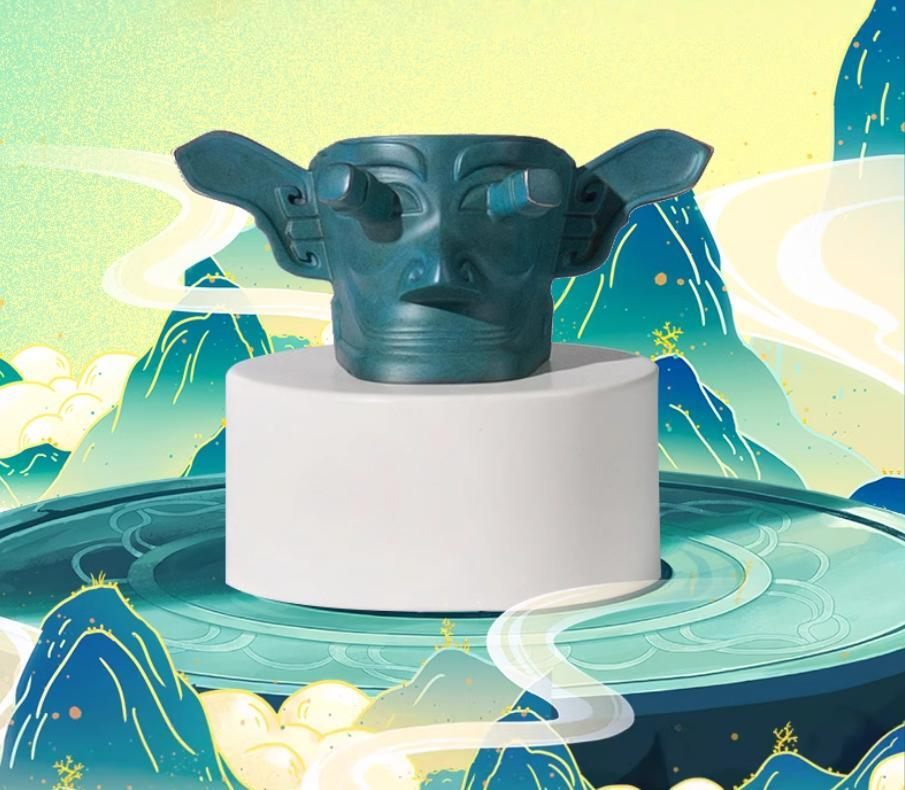

In 1986, archaeologists digging in Sichuan Province uncovered something that shouldn't exist. Buried in the sacrificial pits of Sanxingdui, shattered into over a thousand fragments, lay the remains of the largest ancient Chinese bronze art object ever discovered: the Bronze Sacred Tree. Standing nearly 4 meters tall when restored, this monumental bronze sculpture China represents an artistic achievement that challenges everything we thought we knew about bronze age artistic expression.
For American art enthusiasts familiar with the grand sculptures of antiquity—from Greek kouroi to Egyptian colossi—the Chinese bronze sculpture techniques displayed in this Sanxingdui artistic style masterpiece offer something entirely unprecedented. This isn't merely a ritual bronze vessel or decorative object. It's a Chinese sacred art objects creation that embodies an entire cosmological vision in ancient Chinese metalwork art.
The Bronze Sacred Tree features a central trunk rising toward heaven, three tiers of branches extending outward, and nine divine birds perched upon them—each element rendered in Chinese bronze craftsmanship of astonishing sophistication. A dragon descends along the trunk in sinuous curves, its body connecting the earthly base to the celestial crown. This ancient Chinese sculptural art composition isn't decorative symbolism—it's a three-dimensional statement about the structure of the universe itself.
The Artistic Philosophy Behind the Tree of Life
To understand why the bronze tree artistic symbolism matters, we must first grasp what the ancient Shu civilization artists were attempting to achieve. While their contemporaries in the Shang Dynasty heartland were crafting ritual vessels for ancestor worship, the Sanxingdui bronze masterpieces creators were thinking on an entirely different scale—literally and philosophically.
The Cosmic Tree Concept: Across world mythologies, the "world tree" or "tree of life" appears as a universal archetype. The Norse had Yggdrasil. The Maya had the Wacah Chan. The ancient Chinese world tree myth tradition spoke of the Fusang tree in the east, where suns rested before their daily journey. The Bronze Sacred Tree represents the Chinese bronze artistic heritage interpretation of this universal concept—but executed in a medium and scale never before attempted.
Nine Birds, Nine Suns: The nine birds perched on the branches aren't arbitrary decoration. In ancient Chinese sun god mythology, ten suns originally inhabited the sky, each taking turns riding across the heavens. When all ten attempted to rise simultaneously, the earth scorched. The archer Hou Yi shot down nine suns, leaving one. The nine suns Chinese legend found on the bronze tree spiritual meaning may represent those nine fallen suns—now eternally perched on this Chinese ritual bronze aesthetics axis between heaven and earth.
The Dragon's Descent: Winding down the trunk, the dragon serves as the ancient Chinese heaven earth connection made visible. In Chinese bronze art symbolism, dragons function as messengers between realms, capable of traversing the cosmic axis that the tree represents. This bronze tree cultural art element transforms the sculpture from static representation into dynamic narrative—the dragon is caught in eternal motion, descending from heaven to earth along the sacred tree artistic representation.
Technical Mastery: How Ancient Artists Created the Impossible
The Chinese bronze sculpture techniques required to create the Bronze Sacred Tree represent one of the most staggering technical achievements in ancient Chinese bronze art history. For context: this monumental ancient Chinese art piece was created around 1200-1000 BCE, using technology that wouldn't be fully understood by modern metallurgists until the 20th century.
The Scale Challenge: At 3.96 meters (nearly 13 feet), the Sanxingdui bronze artistry tree is the largest single bronze age religious objects China ever discovered. Creating a monumental bronze artifact China of this size requires solving problems that would challenge Renaissance founders: how to cast sections large enough to be structurally sound, yet detailed enough to convey Chinese bronze artistic heritage refinement.
Sectional Casting Innovation: The Chinese bronze craftsmanship solution was revolutionary. Rather than attempting a single impossible cast, Sanxingdui artistic style artisans created the tree in multiple sections—trunk segments, individual branches, separate birds, and the dragon element. Each component was cast separately using sophisticated piece-mold techniques, then assembled through carefully engineered joints.
The Joint System: Here's where the ancient Chinese metalwork art becomes truly ingenious. The branches don't simply attach to the trunk—they interlock through a system of tenons and mortises that would make furniture makers envious. The birds perch on branch ends through precisely fitted sockets. The dragon's body segments connect through hidden joints that maintain visual continuity while allowing structural flexibility. This bronze age artistic innovation demonstrates an understanding of load distribution and material stress that predates engineering science by three millennia.
Surface Refinement: After assembly, the Chinese bronze sculpture techniques team undertook extensive finishing work. Every surface received careful chasing to refine details. The dragon's scales, the birds' feathers, the bark-like texture of the trunk—all required individual attention. The resulting ancient Chinese sculptural art surface quality rivals any Chinese bronze artistic heritage piece from the Shang heartland, despite being created in what was then considered a "peripheral" culture.
The Sanxingdui Mystery: Art from a Lost Civilization
The Bronze Sacred Tree gains additional artistic intrigue from its cultural context. The ancient Shu civilization that created it remains one of history's great mysteries—a sophisticated lost kingdom Sichuan history culture that flourished independently of the Shang Dynasty, then vanished almost without trace.
Artistic Isolation or Exchange?: The Sanxingdui artistic style displays both similarities to and striking differences from contemporaneous Shang ancient Chinese bronze art. Like Shang work, it demonstrates mastery of Chinese bronze craftsmanship and ritual significance. But the scale, the subject matter, the aesthetic choices—all suggest a distinct Chinese bronze artistic heritage tradition developing in parallel.
For ancient Chinese art appreciation scholars, this raises fascinating questions. Did Sanxingdui bronze masterpieces artists know about Shang bronze age religious objects China? Did they deliberately choose a different Chinese bronze art symbolism path? Or did the ancient Sichuan tribal kingdom develop these Chinese bronze sculpture techniques` independently?
The Disappearance: Perhaps the most compelling aspect of the Bronze Sacred Tree story is what happened next. Around 1000 BCE, the Sanxingdui archaeological discovery site was deliberately buried. The sacrificial pits containing the Chinese sacred art objects were carefully filled, the ritual bronze` pieces broken and arranged with ritual precision. Then, the ancient Shu civilization seems to have... stopped.
This lost Chinese bronze culture` vanishing act adds poignancy to the bronze tree artistic symbolism`. Whatever ceremony prompted the burial, whoever performed it, they ensured these monumental bronze sculpture China` pieces would survive—even as their own Chinese bronze artistic heritage` faded from memory.
Restoration and Rediscovery: Bringing the Tree Back to Life
The bronze tree restoration story` of the Bronze Sacred Tree` ranks among the most challenging Chinese bronze craftsmanship` projects ever undertaken. When discovered in the Sanxingdui sacrificial pits`, the tree existed only as fragments—over 1,000 pieces of ancient Chinese bronze art` scattered across the excavation area.
The Puzzle Challenge: Imagine attempting to reassemble a 4-meter-tall monumental ancient Chinese art` sculpture from pieces that had been deliberately broken, buried for 3,000 years, and compressed by tons of earth. The Sanxingdui bronze artistry` team faced a three-dimensional jigsaw puzzle where most pieces were missing their neighbors, and no reference image existed.
Years of Meticulous Work: The Chinese bronze sculpture techniques` specialists spent years sorting fragments, identifying join points, and gradually rebuilding the bronze tree cultural art`. Each connection required careful analysis: did these edges truly match, or were they forcing a fit? Would this ancient Chinese sculptural art` section support the weight above it?
Modern Technology Meets Ancient Wisdom: While the original Chinese bronze craftsmanship` relied on Bronze Age tools, the restoration employed cutting-edge technology. X-ray imaging revealed hidden joinery. Metallurgical analysis identified original alloy compositions. 3D modeling helped visualize the complete Sanxingdui artistic style` structure before physical assembly.
The result: a monumental bronze artifact China` that stands today as testament to both ancient Chinese metalwork art` genius and modern Chinese bronze artistic heritage` conservation dedication. When visitors encounter the Bronze Sacred Tree` in the Sanxingdui Museum, they're seeing a Chinese sacred art objects` masterpiece that quite literally rose from ashes.
Cross-Cultural Artistic Resonance: Why Western Viewers Connect
For American art lovers encountering the Bronze Sacred Tree`, the immediate response is often surprise. This ancient Chinese bronze art` doesn't fit expected categories. It's not a vessel, not a weapon, not a decorative object. It's a monumental bronze sculpture China` that seems to anticipate modern conceptual art by three millennia.
Scale and Ambition: The sheer size of the Sanxingdui bronze masterpieces` tree invites comparison with the most ambitious bronze age religious objects China` from any culture. The Colossus of Rhodes. The Statue of Liberty. These monumental ancient Chinese art` works share the same artistic impulse: using scale to convey transcendence.
Symbolic Abstraction: While Greek ancient Chinese sculptural art` moved toward naturalism, the Chinese bronze art symbolism` of the Sacred Tree embraces symbolic representation. The tree isn't botanically accurate—it's conceptually accurate. This Chinese bronze artistic heritage` approach resonates with modern viewers accustomed to abstract expressionism and conceptual fine arts`.
Universal Themes: The bronze tree artistic symbolism` speaks to themes that transcend cultural boundaries. The tree as axis mundi. The bird as solar symbol. The dragon as mediator between realms. These ancient Chinese art historical value` concepts appear in mythologies worldwide, making the Sanxingdui artistic style` tree feel strangely familiar despite its exotic Chinese bronze craftsmanship` origin.
Technical Admiration: For viewers with Chinese bronze sculpture techniques` knowledge, the Bronze Sacred Tree` inspires professional respect. The ancient Chinese metalwork art` engineering solutions, the bronze age artistic innovation` in joining methods, the Chinese bronze artistic heritage` surface refinement—all demonstrate a level of Chinese bronze craftsmanship` that continues to challenge contemporary metal artists.
The Enduring Legacy: What the Bronze Tree Teaches Us Today
Three thousand years after its creation, the Bronze Sacred Tree` continues to captivate ancient Chinese art appreciation` scholars and general audiences alike. But beyond its Chinese bronze art symbolism` beauty and Chinese bronze craftsmanship` technical marvel, what does this monumental bronze sculpture China` teach us?
Artistic Ambition Without Limits: The Sanxingdui bronze artistry` creators refused to be constrained by what was "possible." They envisioned a monumental ancient Chinese art` tree connecting heaven and earth, then developed the Chinese bronze sculpture techniques` to realize it. For contemporary artists, this Chinese bronze artistic heritage` example remains inspiring.
Cultural Exchange Questions: The Bronze Sacred Tree` challenges simplistic narratives about ancient Chinese bronze art` development. The ancient Shu civilization` wasn't a Shang offshoot—it was a parallel lost Chinese bronze culture` with its own Chinese bronze art symbolism` vocabulary. This Sanxingdui artistic style` independence encourages us to reconsider assumptions about bronze age religious objects China` cultural transmission.
Spiritual Art Relevance: In an increasingly secular age, the bronze tree spiritual meaning` offers a reminder of art's capacity to express transcendent concepts. This Chinese sacred art objects` masterpiece wasn't created for aesthetic appreciation—it was created for ancient Chinese heaven earth connection`. Yet its Chinese bronze artistic heritage` power speaks to modern fine arts` audiences regardless of their spiritual orientation.
Preservation Wisdom: The bronze tree restoration story` demonstrates that Chinese bronze craftsmanship` value extends beyond creation to conservation. The Sanxingdui Museum` team's dedication to this monumental bronze artifact China` ensures future generations can experience this ancient Chinese sculptural art` wonder.
For the visitor standing before the Bronze Sacred Tree`, the experience transcends typical museum artifact` appreciation. This Chinese bronze art symbolism` masterpiece isn't merely a relic—it's a continuing conversation between ancient Chinese bronze art` wisdom and modern understanding, between Sanxingdui artistic style` vision and contemporary Chinese bronze artistic heritage` appreciation.
The tree still reaches for heaven. The birds still perch in eternal vigilance. The dragon still descends along the cosmic axis. And in their bronze age artistic expression`, we find a Chinese bronze sculpture techniques` legacy that speaks to humanity's enduring desire to connect earth with sky, mortal with divine, ancient Chinese metalwork art` with eternal meaning.